all search

Tel: +86-311-66695955, +86 18631137373
Factory Address: No.29-11 Jinyu Avenue, Zanhuang Economic Development Zone, Shijiazhuang City, Hebei Province, P.R.China
Office Address: 14th Floor, East Wing, Business Building 6, Xuhui Zhongrui Mansion, No.281 South Jianshe Avenue, Shijiazhuang City, Hebei Province
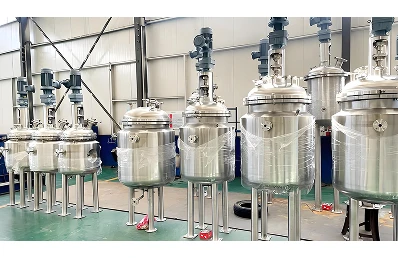
Fully automatic liquid dispensing systemWidely used in industries such as pharmaceuticals, biotechnology, and fine chemicals, the system integrates functions such as feeding, stirring, conveying, online cleaning, and online sterilization. The operating status of the equipment directly affects the stability of the liquid preparation batch, production continuity, and product cleanliness requirements. Regular maintenance and testing can promptly identify equipment hazards, reduce sudden shutdown failures, and extend equipment lifespan. The maintenance and inspection work of the fully automatic liquid dispensing system needs to be carried out in an orderly manner according to the grading plan of daily inspection, weekly inspection, monthly inspection, and annual overhaul.
Daily inspections belong to the basic maintenance process and are generally carried out before and after each shift or daily production. The operator checks the basic operation status of the system, observes whether there is leakage at the tank, pipeline, and valve connections, checks whether the pressure gauges, temperature sensors, liquid level transmitters, and other instruments display normally, and whether there is numerical drift. Check the sound of the mixing motor running and confirm that there is no abnormal vibration. Check the online cleaning nozzle to ensure that the spray is unobstructed and the spray coverage is complete. At the same time, check the system control interface, verify historical alarm records, promptly handle alarm information, clean up dust and residual materials on the surface of the equipment, clean the appearance of the equipment, and keep the operating area clean. After completing daily inspections, keep records for easy traceability of equipment operation.
Weekly maintenance and inspection, adding component function checks on the basis of daily inspections. Conduct opening and closing tests on pneumatic valves and diaphragm valves, observe the response speed of valve actions, and check for aging and deformation of seals. Check the pressure difference of the pipeline filter. If the pressure difference exceeds the set range, promptly disassemble, wash or replace the filter element. Check the status of various hoses and sealing gaskets, and inspect for swelling and cracking. Check the operating status of the mixing blade, confirm that the blade is securely fixed and free from looseness and wear. Check the compressed air supply pressure, investigate the water accumulation in the air source pipeline, and clean the air source filter. At the same time, test the system alarm function and confirm that signals such as high and low liquid level alarms and over temperature alarms can be triggered normally.
The monthly maintenance inspection focuses on instrument calibration and pipeline system inspection. According to the requirements of metrological management, pressure, temperature, weighing pH、 Carry out calibration work on key instruments such as conductivity to ensure accurate detection data. Inspect the jacket pipeline of the tank body to confirm smooth flow of the heat exchange medium. Perform functional testing on the online cleaning and sterilization circuits to check the cleaning flow rate and sterilization temperature maintenance. Check the pump body seal, clean the residual materials inside the pump chamber, and inspect the pump operation noise and flow stability. Check the control system circuit and wiring terminals, confirm that the circuit is not aging or loose, and that the control cabinet is dissipating heat normally. Verify the safety interlock function of the equipment and confirm that the interlock protection action is reliable.
Annual deep maintenance inspection needs to be implemented in conjunction with the production downtime window period. Disassemble and inspect the mixing mechanism, check the wear of the bearings, and replace the lubricating grease as needed. Check all pipeline seals and diaphragms, and replace them uniformly according to the degree of aging. Visually inspect the interior of the tank to check for corrosion and scratches on the polished surface. Conduct integrity testing on the entire pipeline to confirm that there are no defects in the welding position of the pipeline. Verify all measuring instruments and update instrument calibration records. Check the backup status of system software and programs, and ensure proper data backup. Check the safety valve and pressure relief device to ensure that the pressure relief function is normal. After completing maintenance, carry out no-load and load test runs to verify the stability of various process parameters of the system before putting it into production use.
In addition to periodic maintenance and inspection, attention should also be paid to the detailed management of the system during use. Maintenance operations should be carried out by personnel familiar with the equipment structure. Before operation, safety isolation should be done, and power and gas should be cut off. After online cleaning and sterilization of equipment, it is necessary to confirm that the pipeline is dry to reduce the erosion of residual media on the seals. After the production of different materials is completed, cleaning should be carried out according to the process requirements to avoid pipeline blockage and microbial growth caused by material deposition. All maintenance, testing, and calibration work shall be recorded in complete written or electronic form for easy auditing and equipment fault tracing.
Fully automatic liquid dispensing systemMaintenance and inspection is not a single maintenance task, but a continuous equipment management process. Carry out inspections, functional testing, instrument calibration, and component replacement according to the grading cycle, continuously maintain the status of equipment hardware and control systems, reduce the probability of equipment failure, ensure the stability of the liquid preparation process, and meet industry production and cleanliness related regulatory requirements.