all search

Tel: +86-311-66695955, +86 18631137373
Factory Address: No.29-11 Jinyu Avenue, Zanhuang Economic Development Zone, Shijiazhuang City, Hebei Province, P.R.China
Office Address: 14th Floor, East Wing, Business Building 6, Xuhui Zhongrui Mansion, No.281 South Jianshe Avenue, Shijiazhuang City, Hebei Province
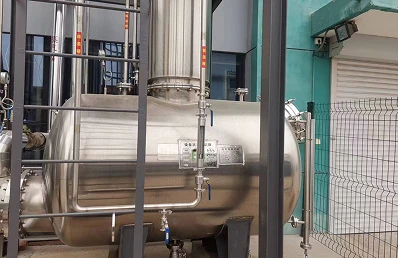
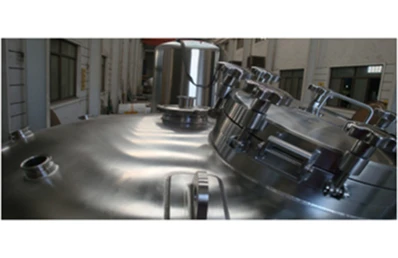
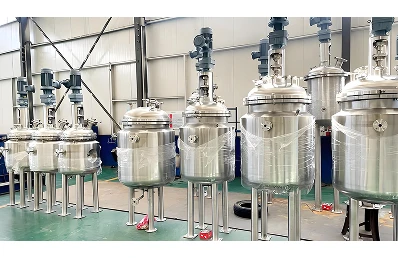
Mixing TankWidely used in industries such as pharmaceuticals, chemicals, food and beverage, water treatment, and fine daily chemical products, mainly for processes such as drug preparation, solvent mixing, and material proportioning. As the core component of the liquid distribution tank, seals cover types such as flange seals, manhole seals, mechanical seals for mixing shafts, and O-ring seals for pipe openings. They mainly play a role in sealing and preventing leakage, dust and bacteria, and isolating external impurities.
Under long-term conditions of constant temperature, stirring, medium immersion, and repeated start stop, the sealing components of the mixing tank are prone to aging, hardening, cracking, relaxation, and other problems, which can lead to tank leakage, material contamination, substandard antibacterial properties, and mixing shaft leakage, directly affecting production stability and product qualification rate. This article provides a detailed explanation of the methods for determining the aging of sealing components in liquid distribution tanks, the standardized replacement process, daily maintenance points, and common pit avoidance issues, to help enterprises do a good job in equipment operation and maintenance.
1、 Common criteria for judging the aging of sealing components in liquid distribution tanks
The aging of the sealing components of the mixing tank does not need to wait for severe leakage before treatment. It can be judged in advance through appearance and operating status, and timely replacement can avoid production failures.
1. Appearance and physical aging characteristics: The sealing rubber ring and gasket have hardened, lost elasticity, become sticky, powdery, cracked, locally damaged, deformed and bulging, etc; Seals that come into long-term contact with liquid media may experience issues such as whitening, swelling, shrinkage, and discoloration, all of which fall under the category of aging failure.
2. Abnormal performance of equipment operation: During the static or stirring process of the mixing tank, there is trace leakage and hanging of liquid at the flange, manhole, shaft seal, and pipe mouth positions; The airtightness of the equipment has decreased, and the vacuum pressure and sterile pressure parameters do not meet the standards; After cleaning the tank, there may be leakage of liquid and external dust and water vapor entering the tank, which is most likely caused by aging of the sealing components.
3. Determination of operating cycle: Conventional silicone and EPDM seals have a normal operating cycle of about 6-12 months; Fluororubber seals are suitable for high temperature and corrosion-resistant working conditions, with a relatively longer service life. Under the condition of long-term high temperature, frequent disinfection and sterilization and corrosive medium immersion, the inspection and replacement cycle should be shortened. Even if the appearance is intact, it is recommended to replace it regularly to avoid hidden failure.
2、 Standard replacement process for sealing components of the dispensing tank
Liquid preparation tanks are often used in clean production scenarios. The replacement of seals not only ensures the sealing effect, but also meets the requirements of clean, sterile, and residue free production, and follows standardized operating procedures.
1. Shutdown and pressure relief, emptying disinfection and sterilization
Before changing the job, first stop the mixing, feeding, and discharging equipment of the mixing tank, cut off the power supply of the equipment, close all valves, release the pressure inside the tank, and ensure that the tank is free of pressure and residual materials. After emptying the remaining materials in the tank, flush and disinfection and sterilization the tank interior and sealing contact surface. After the equipment is completely cooled and dried, carry out disassembly operations to eliminate potential safety hazards and material pollution problems caused by operations with pressure and materials.
2. Dismantle the old seal and clean the sealing groove
Gently disassemble the flange buckle, manhole cover, and shaft seal fixing components, and remove the old and damaged seals. It is prohibited to use sharp metal cutting tools to pry hard, in order to avoid scratching the sealing groove, flange plane, and shaft contact surface, which may cause equipment damage and continuous leakage.
After disassembly, use a dust-free cloth combined with anhydrous alcohol to clean the residual adhesive residue, material residue, oil stains, and dust on the sealing groove and flange contact surface. Clean the impurities in the dead corners to ensure that the sealing groove is flat, clean, dry, and free of particles and foreign objects, providing a good foundation for the fitting of new seals.
3. Matching selection, pre-processing of new sealing components
Strictly select new seals according to the original specifications, dimensions, and materials of the equipment, and distinguish materials such as silicone, EPDM, and fluororubber based on working conditions. Special seals that are suitable for working conditions should be selected for high temperature, corrosion-resistant, and sterile production scenarios. It is prohibited to mix accessories that do not meet the specifications.
Before assembly under clean working conditions, the new seals should be subjected to aseptic cleaning treatment. A thin coating of pharmaceutical grade lubricating silicone grease can be applied to the surface of the seals to improve assembly smoothness, avoid twisting and jamming during installation, and enhance sealing fit to prevent sealing problems caused by dry assembly. It should be noted that special aseptic and strict working conditions must follow the corresponding process requirements and choose appropriate auxiliary lubrication methods.
4. Assembly, evenly fixed and compressed
Insert the new seal flat into the sealing groove, ensuring no distortion, offset, or wrinkles, and fully fitting the groove body. After installing the gland and flange components, tighten the bolts and buckles evenly diagonally to avoid excessive force on one side causing the sealing components to deform and deviate, resulting in local sealing failure.
When assembling the mechanical seal of the mixing shaft, it is necessary to ensure that the dynamic and static rings are in a smooth fit, and that the shaft rotates without any jamming or abnormal resistance, in order to avoid early wear and leakage problems caused by assembly deviations.
5. Conduct pressure and leakage testing, pass acceptance inspection and put into use
After assembly, let it stand for a period of time to stabilize the structure, and then conduct water injection pressure test, pressure holding test or sterile air tightness test. Observe the sealing positions of flanges, manholes, shaft seals, pipe openings, etc. for no leakage or abnormal pressure relief. At the same time, manually adjust the mixing system and ensure smooth operation without any abnormalities, indicating that the replacement is qualified and can be put into normal production use.
3、 Key points for daily maintenance and upkeep of the sealing components of the dispensing tank
1. Establish a regular inspection and replacement mechanism
Develop a regular inspection plan, inspect the sealing status of each sealing point on the tank body every week, and check for signs of leakage, deformation, and aging; Carry out dismantling inspections every quarter to check for easily worn parts such as shaft seals and manhole gaskets. Set the replacement cycle according to production conditions, replace in advance for harsh working conditions, and prevent overdue service.
2. Standardize production and cleaning conditions
During the production process, avoid overheating and overpressure operation of the mixing tank, and reduce the aging impact of sudden temperature rises and drops on the sealing components; When cleaning disinfection and sterilization, reasonably control the concentration of cleaning agent, disinfection and sterilization temperature and disinfection and sterilization duration to avoid strong oxidant and repeated disinfection and sterilization at high temperature to accelerate the swelling, hardening and aging of seals. At the same time, it is strictly prohibited for the equipment to idle and dry grind, in order to prevent the mechanical seal from being damaged by high temperature in an instant.
3. Manage spare parts storage effectively
Spare seals should be stored in a cool, dry, and dark environment, away from high temperatures, oil stains, and corrosive gases, to avoid premature aging and failure. Adhere to the principle of first in, first out for procurement, eliminate the long-term storage and expiration of spare parts, and ensure the stable performance of sealing components used in assembly.
4. Strictly control assembly and operation details
Clean the sealing contact surface during each disassembly and maintenance to prevent impurities from being trapped between the sealing surfaces; Tighten the bolts evenly diagonally and regularly check the tightness of the bolts to prevent loosening and sealing failure caused by equipment vibration. For long-term shutdown equipment, it is necessary to release some of the pressure on the cover to avoid long-term deformation of the sealing components.
4、 Common operational misconceptions and pitfalls avoidance techniques
Many enterprises have misconceptions in their operation and maintenance, resulting in short service life and repeated leakage of seals. Firstly, if minor leaks are not dealt with in a timely manner, the problem will continue to expand, resulting in seal failure and equipment contamination; Secondly, arbitrarily mixing different materials and specifications of seals, which do not match the medium and working conditions, can lead to swelling and leakage problems; Thirdly, violent installation and unilateral fastening during assembly can cause damage to the seals due to compression and poor fit; Fourthly, neglecting the cleaning of the sealing groove can result in residual particles and foreign objects causing gaps on the sealing surface, leading to persistent leakage. Avoiding the above issues in daily operation and maintenance can effectively extend the service life of seals.
Summary
Mixing TankThe core points of aging replacement and maintenance of seals are to identify aging hazards in advance, standardize shutdown, disassembly and cleaning, accurately match sealing accessories, evenly assemble and tighten, and conduct regular inspections and maintenance. Although seals are small accessories, they directly determine the sealing, cleanliness, and production stability of the liquid distribution tank. By combining their own production conditions, enterprises can establish standardized replacement and maintenance systems, standardize disassembly, cleaning, and assembly processes, effectively reduce leakage failures, lower equipment maintenance costs, and ensure stable and compliant operation of production lines.