all search

Tel: +86-311-66695955, +86 18631137373
Factory Address: No.29-11 Jinyu Avenue, Zanhuang Economic Development Zone, Shijiazhuang City, Hebei Province, P.R.China
Office Address: 14th Floor, East Wing, Business Building 6, Xuhui Zhongrui Mansion, No.281 South Jianshe Avenue, Shijiazhuang City, Hebei Province
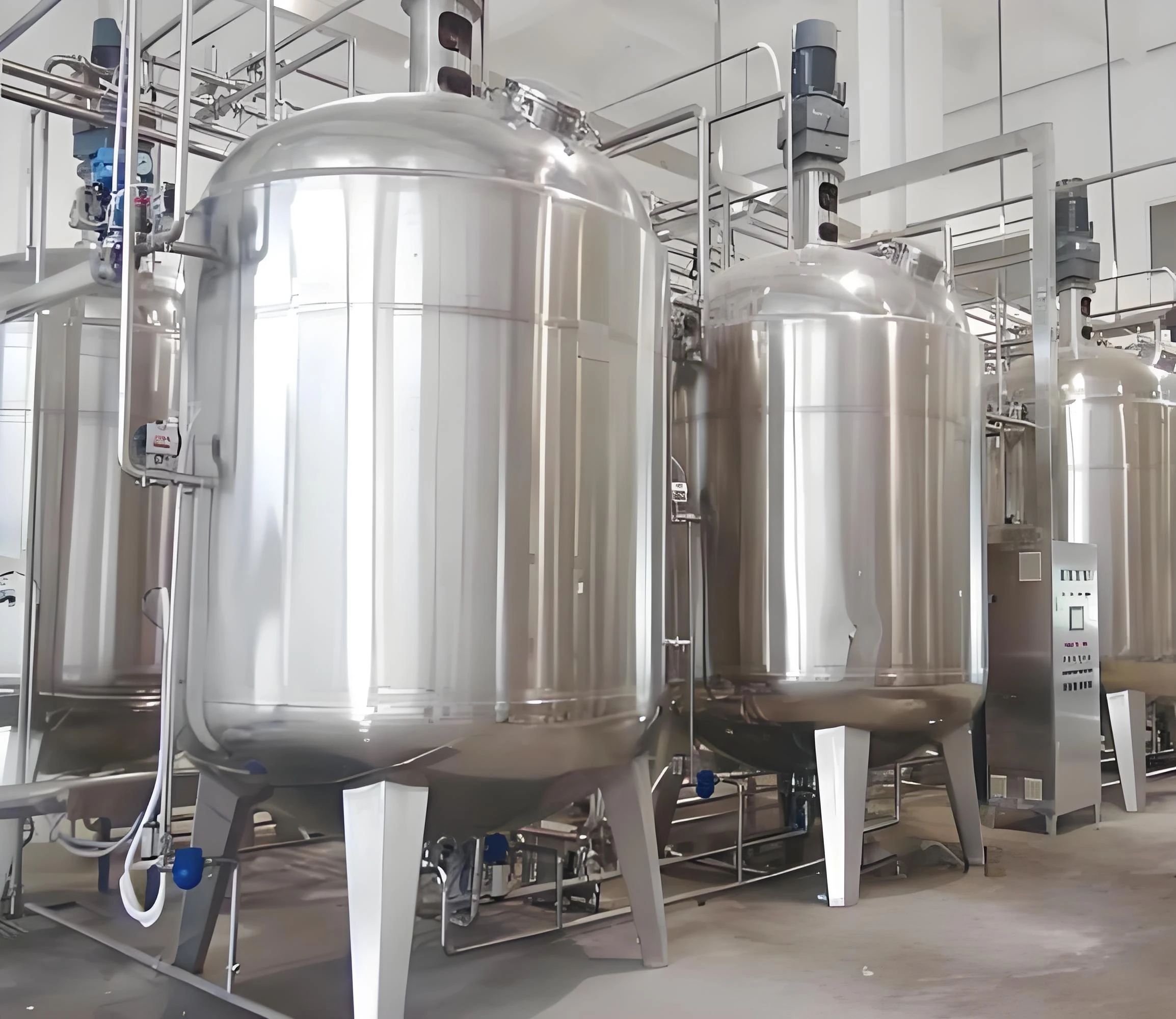
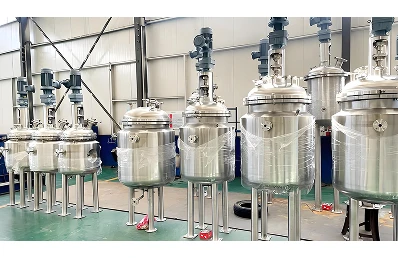
constant temperatureLiquid preparation tankIt is a commonly used process equipment in industries such as pharmaceuticals, daily chemical products, food and beverage, biological fermentation, fine chemicals, and water treatment agent preparation. When the tank completes processes such as raw material mixing, dissolution, reaction, preparation, and storage, the material temperature directly affects the dissolution efficiency, reaction stability, material activity, and overall quality of the finished product. As the core supporting component of the constant temperature mixing tank, the temperature control system relies on heat exchange pipelines, heat exchange media, temperature sensing, and control execution components to form a closed-loop temperature control system. It can complete multiple functions such as heating, constant temperature, cooling, and temperature stability compensation. It runs through the entire process of pre-treatment of ingredients, mid-term reaction mixing, and later insulation and temporary storage, effectively avoiding process abnormalities caused by temperature fluctuations and ensuring standardized operation of the mixing process.
1、 Accurately regulate the temperature of materials to meet the dissolution process conditions of raw materials
There are clear requirements for the dissolution temperature of various solid powders, gelatinous raw materials, and resin materials. Under low temperature conditions, the viscosity of the materials is high, and the powders are prone to clumping and forming difficult to disperse flocs, prolonging the stirring and dissolution time, and even causing incomplete dissolution and material precipitation and layering problems. The temperature control system can stably increase the interlayer temperature of the tank body according to the characteristics of the material, complete heat exchange with hot water and thermal oil, improve the fluidity of the liquid medium, accelerate the infiltration and dispersion speed of the powder, and fully integrate various proportioned raw materials.
For heat sensitive materials that are easily soluble at low temperatures, the temperature control system can introduce cold water for cooling treatment, controlling the overall temperature of the tank to be in the low temperature range, preventing high temperatures from causing premature gelatinization and agglomeration of materials, ensuring the homogenization effect of ingredients, and reducing waste generated due to insufficient dissolution.
2、 Stabilize the chemical reaction temperature and ensure the consistency of the proportioning reaction
Many liquid preparation processes are accompanied by chemical reactions such as neutralization, synthesis, emulsification, hydrolysis, etc. The chemical reaction rate is highly sensitive to temperature, and high temperatures can easily lead to rapid reactions, local overreactions, and the production of excess by-products; Low temperature can cause reaction stagnation, insufficient material conversion rate, and significant differences in finished product composition between batches.
The temperature control system collects real-time temperature data of the materials inside the tank, automatically adjusts the inlet and outlet flow of the heat exchange medium, locks the internal temperature of the tank in the process setting range, balances the exothermic and endothermic changes of the reaction, suppresses local high-temperature hotspots, and makes the reaction rate of the entire tank material uniform and unified. During continuous batch liquid production, it is possible to achieve a unified reaction environment for each batch, reduce the difference in physical and chemical indicators between different batches of liquid products, and maintain stable product quality.
3、 Protect the activity of thermosensitive materials and reduce the loss of effective ingredients
Biological extracts, enzyme preparations, nutrient solutions, herbal extracts, probiotic culture solutions, functional additives, and other materials have poor thermal stability. Prolonged high temperature environments can damage internal active substances, causing effective ingredients to decompose and become ineffective, directly reducing the value of material use.
The temperature control system can maintain a low-temperature and constant temperature storage environment throughout the process. After the liquid preparation is completed, it quickly lowers the temperature of the tank to the preservation storage temperature, isolates the heating effect caused by environmental temperature fluctuations, and largely preserves the active ingredients inside the material. Under high temperature conditions in the room temperature workshop during summer, relying on continuous constant temperature cooling can prevent the overall temperature rise and deterioration of the materials in the tank, extend the storage time of the mixed materials, and reduce raw material loss.
4、 Reduce the temperature difference deformation of the tank, protect the tank structure and sealing components
The tank body of the liquid preparation tank is mostly made of stainless steel material. When the ambient temperature suddenly changes and hot and cold materials are directly fed, the wall of the tank body will generate significant temperature difference stress. Long term repeated deformation can easily cause fatigue of the tank body weld seam and deformation of the inner lining. Flange interfaces and sealing gaskets are affected by temperature expansion and contraction, resulting in seam leakage.
The temperature control system adopts a gradual heating and cooling mode, gradually changing the temperature of the tank interlayer, reducing the temperature difference between the inner and outer walls of the tank, reducing the structural stress caused by metal thermal expansion and contraction, and protecting the welding structure, head, and flange connection of the tank. A stable temperature environment can extend the service life of rubber and silicone seals, reduce liquid leakage failures caused by seal hardening and cracking, and lower equipment maintenance frequency and maintenance costs.
5、 Adapt to the temperature control requirements of aseptic processes, complete sterilization and insulation maintenance
In the scenario of sterile liquid preparation in medicine and food, after the liquid preparation is completed, the materials inside the tank or the inner wall of the tank need to be pasteurized. The temperature control system can stably maintain the constant temperature required for sterilization, complete the sterilization operation for a specified period of time, and kill the impurities and molds attached to the liquid inside the tank and the tank wall. After sterilization, it can be quickly cooled to the sterile storage temperature to avoid prolonged storage at high temperatures that can damage the finished product.
The stable temperature control conditions in aseptic liquid preparation production can cooperate with the CIP cleaning process of the tank body, adapt to the temperature control requirements of the cleaning solution, improve the cleaning and disinfection effect of the tank body, meet the production standards of the clean workshop, and adapt to the GMP clean production environment standards.
6、 Suitable for low-temperature insulation storage, realizing the temporary storage and transportation of finished liquid products
The finished liquid after completing the ratio modulation often cannot be directly transported to the next process and needs to be temporarily stored in the mixing tank for transition. The temperature difference between day and night in the environment, as well as seasonal temperature changes in the workshop, can cause problems such as stratification, crystallization, and viscosity changes in the liquid inside the tank.
The temperature control system maintains a constant temperature and insulation, allowing the finished liquid to maintain the process storage temperature, preventing the low-temperature crystallization and precipitation of high viscosity drugs and the low-temperature solidification of oily materials, ensuring stable fluidity during discharge and transportation, facilitating pipeline transportation, filling and packaging operations, avoiding crystal material blockage in the transportation pipeline, and ensuring smooth discharge from the assembly line.
7、 Intelligent closed-loop regulation reduces manual operation errors
Traditional temperature controlled mixing tanks rely on manual observation of thermometers and manual switching of cold and hot medium valves to adjust temperature. Temperature control relies on the experience of operators, which can easily lead to over temperature and under temperature errors. The complete temperature control system is equipped with temperature sensors, PLC control modules, and electric control valves, which can compare the set temperature with the actual material temperature in real time, automatically switch heating, cooling, and insulation modes, and do not require manual intervention throughout the process.
Not only does it save manual operation input in the workshop, but it also avoids process scrap caused by human operation errors. It is compatible with automated production line linkage control and can be connected with the upper computer and production line control system to achieve temperature data recording and traceability, making it easy to organize production process records and trace quality.
summary
constant temperatureLiquid preparation tankThe core function of the temperature control system covers multiple dimensions, including raw material dissolution temperature control, chemical reaction pressure stabilization, preservation of active materials, tank structure protection, aseptic sterilization, constant temperature storage of finished products, and accurate automation control. It is a key supporting system for achieving standardized liquid preparation processes, unified batch quality, and long-term stable operation of equipment. Based on the heat resistance properties of the materials and production processes, hot water, thermal oil, and cold water temperature control configurations are selected to fully utilize the efficiency of the temperature control system and adapt to diverse usage scenarios such as fine batching, aseptic production, and continuous industrial production.