all search

Tel: +86-311-66695955, +86 18631137373
Factory Address: No.29-11 Jinyu Avenue, Zanhuang Economic Development Zone, Shijiazhuang City, Hebei Province, P.R.China
Office Address: 14th Floor, East Wing, Business Building 6, Xuhui Zhongrui Mansion, No.281 South Jianshe Avenue, Shijiazhuang City, Hebei Province
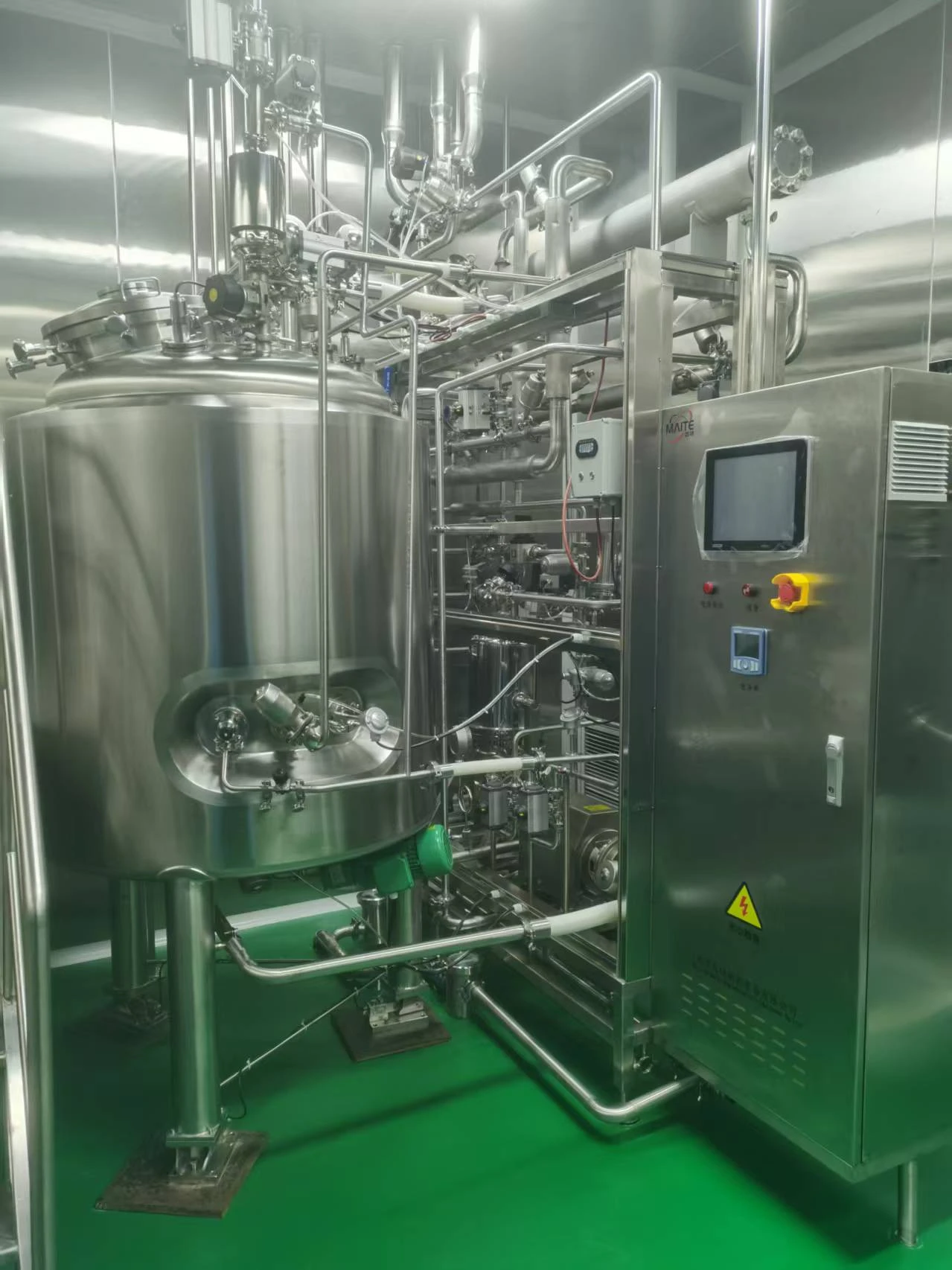
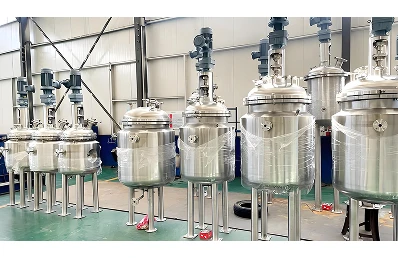
Fully automatic liquid dispensing systemIt is a core automation equipment in industries such as chemical, environmental water treatment, food and pharmaceutical, and fine processing. It can automatically complete processes such as raw material proportioning, stirring and dissolution, quantitative transportation, and constant temperature control, effectively improving the accuracy of liquid preparation and production efficiency. The equipment has a high degree of automation and a large number of components, requiring strict preparation work before startup. If the preliminary inspection and pre-processing process are omitted, it is easy to encounter problems such as proportioning deviation, material residue, equipment jamming, and pipeline blockage, which will affect production stability. This article provides a detailed overview of the standardized preparation work before starting the fully automatic liquid dispensing system, helping enterprises standardize the startup process and ensure the smooth operation of equipment.
1、 On site environment and equipment appearance inspection
Before starting up, it is necessary to first check the operating environment of the equipment to provide basic conditions for the stable operation of the system. It is necessary to clean up debris, accumulated materials, and tool accessories around the equipment to ensure that the equipment operation area, heat dissipation area, and pipeline layout area are open and unobstructed, without obstruction or obstacles, and to avoid affecting equipment heat dissipation and daily operation and maintenance.
At the same time, inspect the overall appearance of the fully automatic liquid dispensing system, checking for any damage, deformation, or looseness in the equipment body, control cabinet, and operation console. Check whether the grounding device of the equipment is intact, whether the circuit casing is worn, exposed, or aged, confirm that the on-site working conditions are clean, safe, and compliant, and eliminate environmental and appearance hazards before proceeding to the next step of preparation work.
2、 Circuit, gas, and water system troubleshooting
The water, electricity, and gas circuits are the power core of the fully automatic liquid dispensing system, and systematic inspection before startup is the key to avoiding equipment failures. In terms of circuits, it is necessary to check whether the power lines, switches, and wiring terminals are firmly connected, without any signs of looseness, virtual connection, or overheating. Confirm that the voltage is within the rated operating range of the equipment, and that the control cabinet indicator lights and instrument standby status are normal.
The air system needs to check the sealing of the air compressor, pressure regulating valve, and gas pipeline, identify problems such as air leakage and unstable pressure, adjust the air pressure to the standard operating parameters of the equipment, and ensure that the pneumatic valves, mixing mechanism, and conveying components can operate normally. The waterway system needs to check that the inlet and return pipes are connected properly, the valve opening and closing status is normal, there is no leakage or blockage in the pipeline, the water pressure of the water source is stable, and it meets the water supply requirements of the liquid distribution system.
3、 Verification and calibration of material and formula parameters
The precision of liquid mixing ratio is the core advantage of fully automatic liquid mixing system. Before starting up, it is necessary to accurately check the material and formula parameters to avoid material loss caused by mixing errors. Firstly, confirm that the category, specifications, and purity of the raw materials required for this production meet the production requirements. Check that the raw materials have no issues such as deterioration, clumping, contamination, expiration, etc. The material storage capacity is sufficient to meet the requirements of a single production batch.
Next, check the parameters of the liquid preparation formula in the operating system backend, including the ratio of raw materials, solution concentration, total amount of liquid preparation, stirring time, constant temperature, settling time, and other core data. Confirm that the parameter settings are correct based on the production work order. For batch production and material replacement production scenarios, it is necessary to clear the residual formula data from the previous batch in advance to avoid parameter mixing and abnormal liquid preparation accuracy.
4、 Cleaning and inspection of tanks, pipelines, and components
The internal cleanliness of the equipment directly affects the quality of the prepared liquid products. Before starting up, it is necessary to perform a thorough cleaning and inspection of the tank, pipelines, and core components. Firstly, check the interior of the mixing tank, dissolution tank, and storage tank to confirm that there are no residual waste liquids, sediment impurities, or material scaling, and that the inner walls of the tank are clean.
Check that the conveying pipeline, filter element, and valve channels are unobstructed, and that the filter element is not damaged, blocked, or ineffective. Replace the aging filter element in a timely manner according to production needs. For the production scenarios of material and batch changes, it is necessary to complete the flushing and cleaning of pipelines and tanks in advance to avoid the problems of cross mixing and residual pollution of different materials, and ensure the purity and quality standards of the prepared liquid products.
5、 Inspection of working conditions of core moving parts
The fully automatic liquid dispensing system includes multiple moving components such as a mixer, metering pump, pneumatic valve, and conveying motor. Before starting up, the working conditions of each component need to be checked one by one. Check that the mixing blade is securely installed, without looseness, displacement, or deformation, and that there is no jamming or interference during operation; The metering pump and quantitative conveying equipment are in normal condition, without blockage or abnormal noise, and the metering accuracy is within the normal range.
At the same time, check the flexible opening and closing of all electric and pneumatic valves, the sensitivity and effectiveness of induction switches and limit devices, the stable installation and normal display of sensors, level gauges, thermometers and other detection components, and ensure that all components of the equipment can operate in a coordinated and stable manner without any faults or errors.
6、 No load trial operation and parameter fine-tuning
After completing various static checks, it is necessary to conduct a no-load trial run of the equipment, which is the key finishing work before starting up. Start the equipment in no-load operation mode, test whether the mixing, water delivery, valve switching, parameter sensing and other functions are normal, and observe whether there are any abnormal noises, shaking, errors, lagging and other abnormal situations during the operation of the equipment.
After normal no-load operation, based on the on-site environment, material status, and production requirements, fine tune the equipment operating parameters, calibrate core data such as measurement accuracy, temperature control parameters, and mixing speed, and identify operational hazards in advance to ensure stable equipment conditions and accurate proportioning during formal feeding production.
7、 Confirmation of Safety Protection and Emergency Preparedness
Before officially starting the equipment, safety protection checks and emergency preparedness work must be completed. Confirm that the safety protection devices of the equipment are intact, the protective doors and baffles are closed in place, and the emergency stop button function is normal. Check that the on-site fire-fighting equipment, emergency flushing devices, and waste liquid collection equipment are in good condition and usable.
At the same time, operators need to confirm that they are wearing the corresponding protective equipment, familiar with the equipment operation procedures and emergency response processes, and be prepared for emergencies such as overflow, power outages, and equipment failures to ensure the safety and controllability of the production process.
Summary
Fully automatic liquid dispensing systemThe preparatory work before startup focuses on the seven dimensions of environmental appearance inspection, water, electricity and gas path troubleshooting, formula material verification, equipment cleaning and disinfection and sterilization, moving parts detection, no-load test run, and safety emergency preparedness. Standardizing and implementing the pre startup process can effectively avoid problems such as proportioning deviation, pipeline blockage, equipment failure, and material pollution, ensuring the stable operation of the fully automatic liquid dispensing system and meeting the liquid dispensing accuracy standards. This not only improves production efficiency but also reduces equipment operation and material loss costs, helping enterprises standardize and refine production.