all search

Tel: +86-311-66695955, +86 18631137373
Factory Address: No.29-11 Jinyu Avenue, Zanhuang Economic Development Zone, Shijiazhuang City, Hebei Province, P.R.China
Office Address: 14th Floor, East Wing, Business Building 6, Xuhui Zhongrui Mansion, No.281 South Jianshe Avenue, Shijiazhuang City, Hebei Province
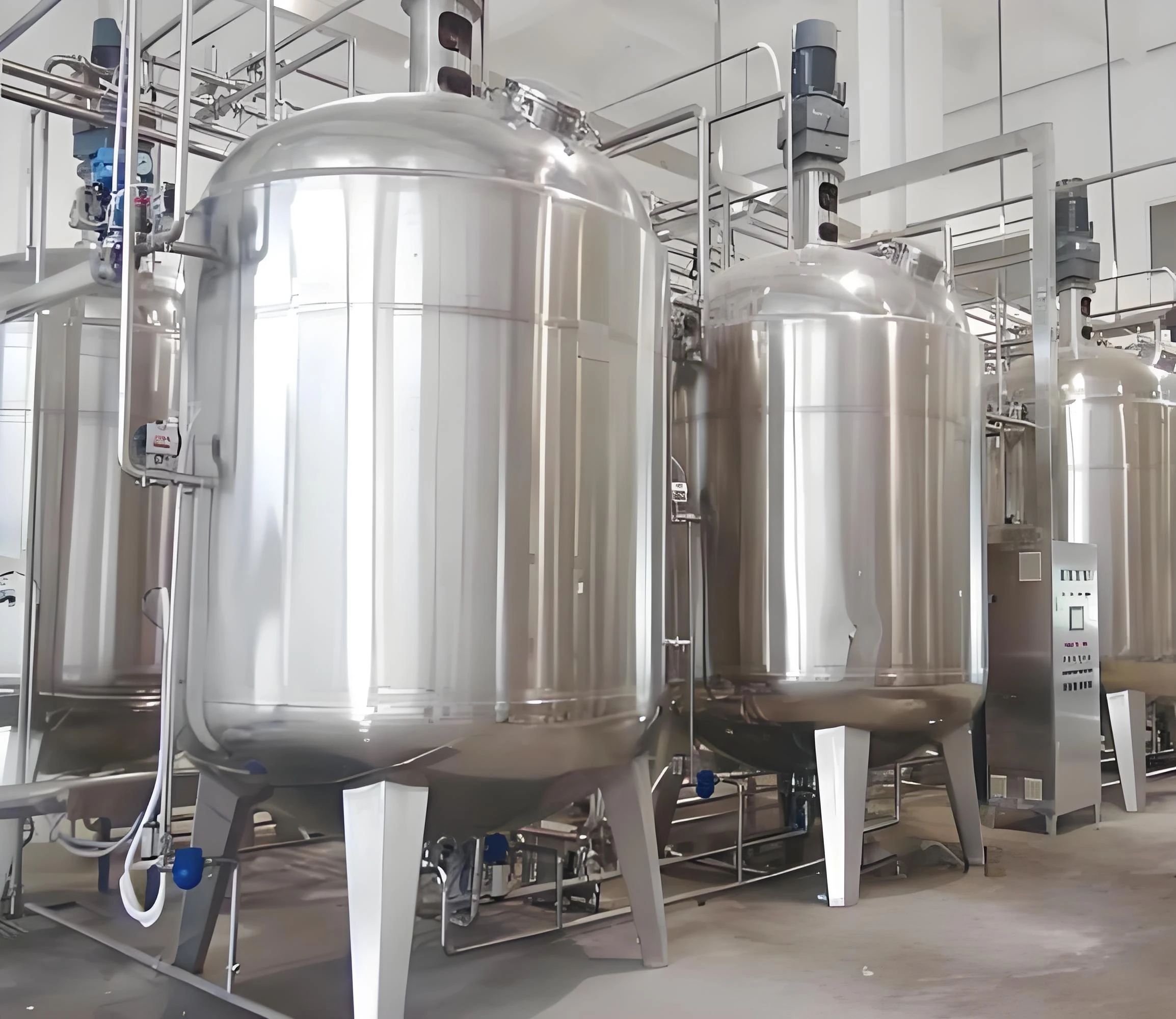
Mixing tankWidely used in industries such as pharmaceuticals, chemicals, water treatment, and food processing, it is often idle for a long time due to project interruptions and capacity adjustments. If the tank is not stored and maintained properly, it is prone to problems such as inner wall corrosion, aging of the lining, failure of seals, pipeline blockage, and microbial growth. When it is put back into use, a large amount of cleaning and maintenance work is required, which can directly affect the safety of the medium and the service life of the equipment in serious cases. This article summarizes the storage and maintenance standards for idle liquid tanks according to the entire process of shutdown cleaning, internal protection, external management, storage environment, regular inspection, and pre use review.
1、 Pre idle stage: cleaning and media removal
Before formal sealing and storage, residual materials inside the tank are the primary hazard, as different materials will continue to corrode the tank wall and breed dirt.
Empty all materials from the tank and use process water to flush the inner wall of the tank, mixing blade, spray pipeline, inlet and outlet ports, bottom valve, and sampling port. If dealing with viscous, easily crystallizable, and fermentable materials, use a cleaning agent for cyclic cleaning, and if necessary, carry out soaking treatment.
After cleaning, fully drain the residual liquid, open the manhole and valves, and use ventilation methods to completely dry the tank to prevent water accumulation and residue. Water containing environments can easily cause pitting corrosion of stainless steel and moisture aging of enamel layers.
For the mixing tank that comes into contact with acids, bases, and organic solvents, check the inner wall for material adhesion and corrosion spots, and keep records; There is scaling and sediment that needs to be removed to avoid long-term adhesion and local corrosion.
Remove temporary hoses and easily detachable sensors, and store them separately for protection; Protect instruments such as pressure gauges and liquid level gauges.
2、 Internal sealing and protection of the tank body, treated according to material differentiation
The material of the mixing tank is divided into stainless steel, enamel, plastic lining and other types, and the internal protection scheme cannot be universal.
Stainless steel mixing tank
After drying, two sealing methods can be selected. Short term idle (within 3 months), keep the manhole slightly open, and continuously ventilate and prevent moisture; Long term idle can be sealed with dry and clean nitrogen gas for inert sealing, isolating humid air and reducing the risk of oxidation and corrosion. Prohibit sealed storage of damp tanks to prevent rust spots from forming on the inner wall due to condensation. Do not directly apply protective oil such as engine oil on the inner wall, as it is difficult to clean and may contaminate materials when put into production again.
Enamel assembly/enamel mixing tank
It is strictly prohibited for hard objects to enter the tank to prevent collision with the enamel layer. Keep the interior dry and avoid the interface between the porcelain layer and the steel plate from becoming damp and peeling off due to high humidity environment. Do not stack tools or debris into the tank at will; If sealing is required, regularly open the lid for ventilation to reduce condensation.
Plastic lining, fiberglass mixing tank
Avoid direct sunlight to prevent the lining from aging and becoming brittle; Keep the tank dry and ventilated, and prohibit long-term soaking of the lining with residual chemical media.
Sealing components, mixing system maintenance
The mechanical seal, O-ring, and gasket of the mixing shaft are components that are prone to aging. When idle for a long time, avoid continuous pressure on the sealing surface; Moderately loosen the cover to prevent deformation of the rubber seal. Apply suitable lubricating protective agent to the sealing contact surface to prevent drying and cracking. If there is no continuous rotation condition for the stirring blade, it should be manually turned regularly to avoid deformation and bearing locking caused by one-way static placement of the shaft.
3、 External pipeline, valve and accessory component pipe protection
All import and export valves are cleaned and dried according to the characteristics of the medium, and the valve chamber is emptied of accumulated liquid; The valve should maintain a suitable opening to avoid long-term sealing and adhesion caused by the valve core being tightly closed. Install a dust cover on the flange end face to prevent dust and debris from entering the pipe opening.
Drain the accumulated fluid from the external pipeline and, if necessary, remove it for independent storage; The pipe opening should be sealed with blind plates or dust-proof plugs to prevent insects and dust from entering the tank and forming a source of pollution.
Spray the ball and clean the pipeline to completely drain accumulated water, preventing the pipeline from freezing and cracking in low-temperature environments, or the nozzle from being blocked by scaling on the inner wall.
4、 Storage environment requirements
Prioritize storing in an indoor ventilated warehouse and avoid placing outdoors. The outdoor environment is exposed to sunlight and rain, with a large temperature difference between day and night, which accelerates the aging of paint and seals, and rainwater seeps into the pipe mouth, causing internal corrosion. When conditions are limited and outdoor storage is required, a rainproof and sunshade should be built, and the bottom of the tank should be elevated.
The bottom of the tank should be elevated with sleepers and brackets, and should not directly contact the ground to prevent water erosion of the supports and tank bottom welds.
Stay away from areas with corrosive gases and dust, and do not stack acidic or alkaline materials or construction waste in the surrounding area.
Take anti freezing measures during the low temperature season to ensure that there is no residual water accumulation in the tank and pipelines, and to prevent equipment damage from freezing.
5、 Regular inspection system during idle period
Short term idle can be checked once a month; It is recommended to conduct quarterly inspections if it has been idle for more than 6 months.
Inspection: Check whether the external anti-corrosion coating of the tank is peeling off and whether the support is corroded; Open the lid to check for condensation and moisture regain inside; Check whether the sealing components have hardened or cracked; Confirm that there is no jamming in the stirring system.
If moisture and water are found in the tank, ventilate and dry it again in a timely manner; Rust and damaged coating should be repaired for corrosion prevention as soon as possible. Synchronize the maintenance ledger, record the sealing time and inspection status.
6、 Common taboos for long-term idle
The residual materials inside the tank are directly sealed and sealed, which is prone to scaling and corrosion of the tank body;
Sealed storage of accumulated water in the tank can induce pitting corrosion of stainless steel and microbial growth;
The rubber seal is in a compressed state for a long time, causing deformation and leakage;
Outdoor storage without protection, severe corrosion of pipelines and flanges;
Randomly stacking tools inside the tank, scratching the inner wall and enamel protective layer.
7、 Re enable pre review work
Before the idle tank is put into operation, it cannot be directly fed and operated. First rinse and disinfect, check for any damage to the welds, lining, and enamel; Test the operation status of the mixing system and the sealing performance of valve opening and closing; Instrument recalibration. If necessary, carry out leak detection and cleanliness verification, and confirm that the process requirements are met before starting the liquid preparation operation.
Summary
idleMixing tankCore maintenance process: material cleaning → sufficient drying → differentiated internal protection → sealing of pipe openings, protection of sealing and mixing mechanisms → control of storage environment → periodic inspection.
Proper sealing and maintenance can effectively prevent tank corrosion, pipeline blockage, aging and failure of accessories, significantly reduce maintenance costs for reuse, and ensure clean and stable operation of the liquid distribution system.