all search

Tel: +86-311-66695955, +86 18631137373
Factory Address: No.29-11 Jinyu Avenue, Zanhuang Economic Development Zone, Shijiazhuang City, Hebei Province, P.R.China
Office Address: 14th Floor, East Wing, Business Building 6, Xuhui Zhongrui Mansion, No.281 South Jianshe Avenue, Shijiazhuang City, Hebei Province
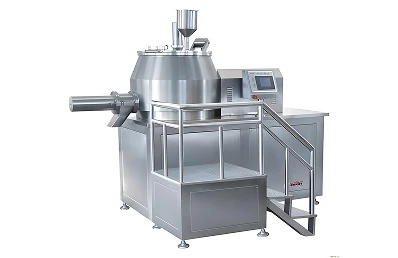
Wet granulatorIt is the core key equipment of solid preparation production lines in pharmaceuticals, food and health products, fine chemicals, etc. The operating status of the equipment directly determines the uniformity of particle forming, batch stability, and product qualification rate. In the long-term continuous production process, equipment is prone to hidden problems such as aging of seals, wear and tear of mixing components, accumulation of pipeline residues, deviation of parameter accuracy, and decreased electrical sensitivity.
If there is a lack of standardized regular maintenance and performance testing procedures, it is not only prone to production problems such as loose granulation particles, uneven particle size, and material contamination, but also increases the probability of equipment failure and shutdown, shortens equipment service life, and even leads to failure in workshop GMP cleaning verification and equipment verification. To help enterprises establish a standardized equipment operation and maintenance system, this article provides a detailed explanation of the regular maintenance methods and compliance performance testing items for wet granulation machines, covering the entire process of daily inspection, weekly inspection, monthly inspection, annual inspection, and overall performance verification.
1、 Classification and Periodic Specification for Regular Maintenance of Wet Granulator
The maintenance work of wet granulation machine should follow the principle of "prevention first, regular inspection, layered maintenance, and full traceability". According to the wear and tear pattern of equipment components, production load, and clean production requirements, it is divided into four levels: daily maintenance, weekly maintenance, monthly maintenance, and annual overhaul maintenance. It is suitable for the operation and maintenance rhythm of continuous production workshops and effectively avoids the accumulation of hidden faults.
Daily maintenance mainly focuses on cleaning, appearance inspection, and basic condition verification, implementing basic maintenance after each batch and daily production; Weekly maintenance focuses on inspecting vulnerable parts, providing simple lubrication, and clearing pipelines; Monthly maintenance focuses on in-depth maintenance of the mechanical structure, electrical system, and pneumatic components of the entire machine; The annual maintenance is a systematic overhaul of the whole machine, including component maintenance and replacement, precision calibration, disinfection and sterilization and dedusting of the whole machine, and recovery of equipment operating performance.
2、 Daily maintenance: Basic maintenance for each batch/day (regular cleaning verification)
Daily maintenance is the foundation for ensuring the continuous and stable operation of equipment, with the core purpose of removing material residues, eliminating dust and dirt accumulation, identifying surface hazards, avoiding the long-term accumulation of minor problems and failures, while meeting GMP daily cleanliness requirements.
After production is completed, it is necessary to promptly perform the whole machine cleaning operation. Through CIP cleaning and manual review, the material residue powder, wet material agglomeration, and dry scaling layer on the surface of the material bin, mixing blade, granulation chamber, discharge port, and screen should be cleaned to ensure that there is no material retention inside the equipment, prevent residual materials from moldy and deteriorating, breed microorganisms, and affect the quality of the next batch of production. After cleaning, dry and blow clean the equipment chamber and pipelines to keep the interior of the equipment dry and clean.
Check the appearance integrity of the equipment before starting up daily, and ensure that the body, protective cover, and protective panel are not damaged or loose; Check the operation of the equipment for any abnormal noise or vibration deviation; Verify that the indicator lights and display parameters on the electronic control panel are normal and there are no error codes. At the same time, clean up the debris, accumulated water, and dust around the workstations of the equipment to maintain the cleanliness and orderliness of the work area.
At the end of daily maintenance, it is necessary to fill in the equipment operation and cleaning ledger in a standardized manner, record the equipment operation status and cleaning situation, and achieve traceability of daily operation and maintenance.
3、 Weekly maintenance: inspection of vulnerable parts and local maintenance
Regular weekly maintenance is carried out for the core components of the equipment that are prone to high-frequency movement, wear and tear, and blockage, to solve minor wear, looseness, and blockage problems that are difficult to detect during daily inspections and ensure smooth operation of the equipment.
Check the accessories of the mixing system, inspect the fastening status of the mixing shaft, mixing blade, and fixing bolts, and ensure that there is no looseness, bending, deformation, or wear. The mixing operation should be centered without eccentricity; Check that the whole pellet cutter and granulation sieve are intact, without damage, blockage, or deformation, and that the sieve aperture is uniform to avoid uneven particle size caused by sieve problems.
Inspect various sealing accessories, including cavity sealing rings, flange gaskets, shaft end seals, and pneumatic valve sealing rings, to ensure that there are no signs of aging, cracking, deformation, or leakage. Replace slightly aged accessories in advance to prevent dust overflow, medium leakage, unstable negative pressure, and other issues.
Moderately lubricate the transmission joints, bearing positions, and manually adjustable components of the equipment, using medicinal grade lubricants suitable for the equipment to avoid pollution caused by excessive lubrication and ensure that the moving parts operate flexibly without jamming. At the same time, clear the dust removal pipeline and exhaust pipeline, remove dust and debris from the pipeline, and ensure stable ventilation, dust removal, and negative pressure suction conditions.
4、 Monthly maintenance: deep structure and system maintenance of the entire machine
Monthly deep maintenance is a core component of equipment preventive maintenance, which involves investigating and maintaining the mechanical structure, electrical system, pneumatic working conditions, and temperature control system of the entire machine, repairing minor performance degradation issues, and stabilizing equipment operation accuracy.
In terms of mechanical structure, thoroughly inspect the operation status of bearings, transmission chains, and reduction mechanisms during disassembly, identify problems such as wear, looseness, and excessive clearance, adjust component clearances in a timely manner, and replace transmission components with severe wear and tear; Calibrate the verticality and levelness of the mixing shaft to prevent long-term eccentric vibration during operation; Check the fastening status of the equipment anchor bolts, reinforce the support structure of the machine body, and reduce the vibration deviation during equipment operation.
In terms of electrical system, open the electrical control cabinet to clean the dust and moisture inside, and check that the circuit terminals are not loose, aging, or loose; Test the sensitivity and effectiveness of emergency stop switch, interlock protection, and overload protection functions; Verify that the power supply voltage and operating current parameters are stable and have no abnormal fluctuations; Check that the grounding device of the equipment is intact, the static discharge is normal, and avoid electrical safety hazards.
In terms of auxiliary working conditions, check the pressure stability of the compressed air system, the dryness of the air source, and clean the oil and water impurities in the filter; Verify that the water supply and sewage pipelines are unobstructed and leak free; Calibrate temperature control, timing, and speed basic parameters to ensure accurate output of process parameters. At the same time, the cavity and dead corner of the whole machine shall be deeply disinfection and sterilization and cleaned to remove the fine residues accumulated for a long time.
5、 Annual maintenance: major overhaul of the entire machine and maintenance of updated parts
Annual major maintenance is the key to restoring the overall performance of the wet granulation machine and extending its service life. It is suitable for shutdown maintenance and seasonal shutdowns, identifying deep hidden dangers in the equipment, completing batch replacement of aging parts, and resetting the accuracy of the entire machine.
Disassemble the core components of the entire machine, inspect the wear of the mixing system, granulation system, and transmission system, replace aging bearings, deformed blades, damaged screens, failed seals, aging pipelines, and other vulnerable parts uniformly, and restore the original operating state of the equipment. Rust prevention maintenance should be carried out on the equipment body and metal structure, and slight rusting and paint peeling areas should be treated to avoid long-term corrosion and aging of the equipment.
After completing the overall structural reset and assembly, recalibrate the equipment's levelness, operational coaxiality, and process parameter accuracy, and synchronously debug the linkage logic of the electronic control system, pneumatic system, temperature control system, and dust removal system to ensure stable and coordinated operation of each module. Finally, carry out no-load and load test runs of the entire machine, identify potential operational hazards, and ensure that the equipment meets performance standards.
6、 Core Performance Testing Items for Wet Granulator (Regular Calibration)
Maintenance and supporting performance testing is the core link to verify the accuracy of equipment operation, ensure compliance with granulation processes, and meet GMP equipment validation. It is necessary to carry out special performance verification on a periodic basis to promptly correct parameter drift and performance degradation issues.
1. Particle molding performance testing
Regularly inspect the particle status of finished products, detect particle size distribution, uniformity, forming rate, and looseness, and investigate issues such as excessive particle breakage, large particle size differences, and unstable forming; Compare the phases of different batches of granules to confirm that the granulation performance of the equipment is stable, with no process deviations, ensuring uniform quality of finished granules.
2. Mixing and stability testing during operation
Detect the operating status of the equipment under no-load and load conditions, verify that the mixing speed is stable, without fluctuation or deviation, and that there are no abnormal noises, severe vibrations, or lagging issues during the operation of the entire machine; Check the uniformity of mixing and stirring to ensure that the powder is fully mixed without any local dead corners, and meets the standards of granulation mixing process.
3. Sealing and cleanliness performance testing
Carry out equipment airtightness testing, check that there is no dust overflow or medium leakage in the chamber, pipeline, flange, and valve positions; After the cleaning is completed, a residue check is carried out to confirm that the equipment has no cleaning dead corners or material residues, meets the GMP cleanliness verification standards, and eliminates the risk of cross contamination.
4. Precision testing of process parameters
Regularly calibrate the core process parameters of the equipment, including stirring speed, mixing time, drying temperature, feed rate, medium addition amount, etc., to correct parameter drift caused by long-term operation; Verify the accuracy of temperature control sensors, timing modules, and electrical control modules to ensure accurate and controllable output of process parameters.
5. Dust removal and performance testing of working conditions
Detect the negative pressure stability and dust collection effect of the dust removal system of the testing equipment, and investigate issues such as pipeline blockage, insufficient negative pressure, and dust diffusion; Verify that the compressed air, water supply, and sewage conditions are operating normally, and the auxiliary system can stably match the production needs of the entire granulation process.
7、 Common Misconceptions in Maintenance and Testing to Avoid
Some enterprises have the problem of heavy production and light maintenance in equipment operation and maintenance. Common non-standard operations such as simplifying cleaning processes, using vulnerable parts beyond the time limit, omitting parameter calibration, and operating equipment with defects can easily lead to continuous deterioration of equipment performance, frequent failures, and fluctuations in product quality.
Daily operation and maintenance should eliminate illegal operations such as blind disassembly, excessive lubrication, mixing of lubricating media, and cleaning of hard tools to avoid damaging equipment structure and polishing inner walls; Strictly implement maintenance and testing according to the cycle, without omitting the steps of deep maintenance and accuracy calibration; Priority should be given to selecting compatible specifications for accessory replacement to ensure equipment compatibility and operational stability.
8、 Maintenance ledger and compliance management
All regular maintenance, performance testing, parts replacement, and parameter calibration work must be recorded in real time, with complete retention of maintenance time, testing items, equipment status, rectification content, and operator information. A complete equipment operation and maintenance ledger should be established. Complete traceability data can meet the compliance requirements of workshop GMP audit, equipment verification, and daily inspections, achieving standardized management of the entire lifecycle of equipment.
Summary
Wet granulatorRegular maintenance and performance testing rely on a layered maintenance system that includes daily cleaning inspections, weekly accessory maintenance, monthly deep inspections, and annual major machine repairs. Combined with five core performance tests: molding performance, operational stability, sealing cleanliness, parameter accuracy, and working condition adaptability, it can ensure long-term stable, accurate, and compliant operation of the equipment from multiple perspectives. Standardized regular operation and maintenance can not only effectively reduce equipment failure rates, extend equipment service life, and reduce production losses, but also continuously stabilize the quality of granulation products, meeting the GMP standardized production and equipment verification requirements of the pharmaceutical, food, and fine chemical industries.