all search

Tel: +86-311-66695955, +86 18631137373
Factory Address: No.29-11 Jinyu Avenue, Zanhuang Economic Development Zone, Shijiazhuang City, Hebei Province, P.R.China
Office Address: 14th Floor, East Wing, Business Building 6, Xuhui Zhongrui Mansion, No.281 South Jianshe Avenue, Shijiazhuang City, Hebei Province
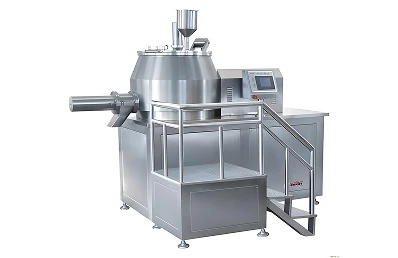
Wet granulatorIt is the core granulation equipment for pharmaceutical solid preparations, food processing, fine chemicals, and new material powder modification industries. It relies on an integrated process of powder humidification, stirring granulation, and drying to solve problems such as powder stratification, dust, poor flowability, and difficulty in tablet molding. Compared to dry granulation equipment, the production process of wet granulation machines involves conditions such as humidification, heat dissipation, moisture dispersion, dust generation, and wastewater discharge, which have more detailed requirements for workshop space, ground foundation, temperature and humidity, cleanliness level, public works, ventilation and dust removal, and safety protection.
The workshop environment does not meet the standards, which can easily lead to uneven drying of particles, moisture absorption and deterioration of materials, cross contamination in the workshop, water accumulation and corrosion of equipment, and dust accumulation. This not only affects the uniformity and batch stability of granulation products, but also results in failure of GMP cleaning verification and non-compliance with production compliance standards in the workshop. To assist enterprises in early workshop planning, equipment entry adaptation, and compliance transformation, this article provides a detailed explanation of the complete set of requirements for the workshop site and environment for installing wet granulation machines, covering hardware site, environmental parameters, supporting conditions, and compliance layout standards in all dimensions.
1、 Workshop space layout and process site requirements
The wet granulation production line belongs to an integrated complete set of equipment, including the main engine, mixing system, discharge mechanism, drying supporting equipment, dust removal device, electric control system and other structures. The process flow is relatively long, and it has clear and standardized workshop space layout, process flow line, and area division. It is the foundation for stable equipment installation and compliant production.
The workshop needs to reserve installation space that matches the size of the equipment, and at the same time, sufficient operation, sampling, inspection, disassembly and maintenance spacing should be reserved around the equipment to avoid equipment being tightly attached to the wall and densely arranged, and to prevent problems such as cleaning dead corners and insufficient maintenance space. The workshop floor height needs to meet the requirements of equipment lifting, top dust removal pipeline, and hot air circulation pipeline layout, ensuring that equipment loading and unloading, equipment maintenance, and pipeline layout are not limited by space.
The site layout must strictly follow the GMP one-way process flow principle, and plan workstations in the order of raw material input, wet mixing, granulation and drying, discharge and granulation, and finished product transportation to achieve separation of people and logistics, avoid process backflow and cross crossing, and effectively reduce the risk of material confusion and cross contamination. The granulation station needs to be independently partitioned and physically separated from packaging, temporary storage, crushing and other processes to reduce the interference of dust and moisture from different processes.
In response to the dust generation and moisture dispersion characteristics of the equipment, it is necessary to centrally plan the wet granulation station to facilitate the unified matching of dust removal, exhaust and dehumidification systems, optimize the overall environmental control difficulty of the workshop, and adapt to normal continuous production.
2、 Ground foundation and load-bearing drainage requirements
The overall weight of the wet granulation machine is relatively large, and there is slight vibration during the production process. The operation is accompanied by humidification, cleaning, and wastewater discharge conditions, which have strict requirements for the load-bearing capacity, flatness, material, and drainage capacity of the workshop floor, directly affecting the stability of the equipment and the cleanliness of the workshop.
The workshop floor needs to have sufficient load-bearing capacity, which can stably bear the weight of equipment, material load, and supporting auxiliary equipment, reserve reasonable load-bearing allowance, and avoid ground settlement, cracking, and deformation problems caused by long-term operation. The overall ground should be flat and compact, with uniform levelness, no potholes, protrusions, or tilt deviations, to ensure that the equipment is vertically centered and evenly stressed after being placed, and to avoid problems such as uneven mixing, abnormal operation noise, and component wear caused by equipment tilt.
The floor of the clean production workshop should be made of specialized flooring materials that are dust-proof, anti-seepage, corrosion-resistant, and easy to clean. The surface should be smooth, seamless, and free of dust and dead corners. It should withstand daily water flushing, disinfection and cleaning, and mild acid-base cleaning media, and be compatible with GMP cleanliness control standards. The floor of ordinary industrial production workshops should be kept dry, clean, and structurally stable to avoid sanding, peeling, and dust accumulation.
Considering that wet production will generate cleaning wastewater and condensation water, it is necessary to set up reasonable drainage slopes and compliant drainage points around the equipment to ensure rapid drainage of accumulated water and wastewater, without any residual sedimentation, and to prevent the growth of microorganisms in the ground water, which can cause equipment foot corrosion and ground mold to pollute the workshop environment.
3、 Requirements for temperature and humidity environment control in the workshop
The wet granulation process involves powder humidification and hot air drying. The temperature and humidity in the workshop directly affect the material dissolution effect, particle forming quality, drying uniformity, and material storage stability. It is the core environmental parameter for granulation process control and must be strictly regulated according to industry standards.
The conventional solid preparation granulation clean workshop requires a standard ambient temperature of 18 ℃ -26 ℃, which is suitable for granulation production of most pharmaceutical excipients and food powders. For the granulation process of temperature and humidity sensitive materials, the temperature can be accurately controlled to 22 ℃ -24 ℃ to ensure stable material properties and uniform molding effects.
The control of relative humidity in the workshop is particularly critical. The relative humidity in the conventional granulation workshop should be maintained at 45% -65% RH. For materials that are prone to moisture absorption, clumping, and are sensitive to heat and humidity, the relative humidity in the workshop should be controlled at 30% -50% RH to avoid high humidity in the workshop, which can cause powder moisture absorption and agglomeration, poor particle drying, and excessive moisture content in the finished product. This can prevent problems such as material mold, deterioration, and decreased stability.
The workshop needs to be equipped with a constant temperature and humidity, dehumidification control system to avoid environmental parameter deviations caused by day night temperature differences and seasonal humidity fluctuations, ensuring a unified granulation environment for each batch and stable batch product quality.
4、 Cleanliness level and pressure difference compliance requirements
In clean production scenarios such as pharmaceuticals, food, and biologics, the wet granulation workshop needs to match the corresponding cleanliness level, strictly follow GMP standards to control the clean environment, pressure difference, and air circulation, and eliminate problems such as dust accumulation, excessive microorganisms, and cross contamination.
The solid preparation clean granulation workshop needs to maintain a corresponding level of clean environment. The workshop is equipped with a complete fresh air filtration, supply and return air, and air purification system to continuously filter particles, floating dust, and microorganisms in the air, ensuring that the production environment is clean and meets standards. The workshop enclosure structure is tightly sealed, with no air leakage or dust accumulation dead corners. The walls and ceilings are smooth and easy to clean and disinfect.
A stable pressure difference should be maintained between the clean area and the non clean area, as well as between areas of different cleanliness levels. The pressure difference should not be less than 10Pa. By controlling the unidirectional flow of clean air through a reasonable pressure difference, the infiltration of unclean air from the outside can be effectively blocked, preventing cross contamination caused by the reverse diffusion of dust and pollutants.
The workshop needs to be equipped with complete auxiliary clean areas, including air shower rooms, material buffer rooms, changing rooms, and cleaning and disinfection areas, to achieve a clean buffer transition for personnel and materials, reduce pollution risks from the source, and meet GMP audit and cleaning verification requirements. The ordinary industrial granulation workshop needs to maintain a clean and ventilated environment, without a large amount of dust and corrosive gas accumulation, to ensure a stable production environment.
5、 Requirements for Ventilation, Dust Removal, and Exhaust Gas Dehumidification Environment
The feeding and stirring process in the early stage of the wet granulation process will generate a small amount of dust, and the drying process in the later stage will emit heat and water vapor, which can easily cause an increase in humidity, dust suspension, and air turbidity in the workshop. Therefore, the workshop must have complete ventilation, dust removal, dehumidification, and exhaust conditions.
The granulation station needs to be equipped with a suitable dust removal and collection device, which can be used for fixed-point dust removal at the feeding and discharging points to timely capture suspended dust, avoid dust diffusion and accumulation, improve the workshop working environment, and avoid safety hazards caused by dust accumulation. The dust producing area can be independently equipped with exhaust structures to achieve directional collection and treatment of dust.
The workshop needs to be equipped with a forced ventilation and exhaust system to promptly discharge the residual heat, moisture, and trace odor gases generated by granulation and drying, to avoid the accumulation of moisture and high temperature in the workshop, and to prevent equipment and materials from being affected by moisture and affecting the production process. The ventilation system of the clean workshop needs to be equipped with a filtering device, and the exhaust process should not damage the cleanliness level and pressure balance of the workshop.
For workshops that produce high moisture absorbing materials for a long time, it is necessary to install industrial dehumidification equipment to regulate the humidity of the workshop on a regular basis, match the low humidity production needs of wet granulation, and ensure uniform drying of particles and stable quality of finished products.
6、 Environmental requirements for supporting sites of public works
The entire process of humidification, stirring, drying, cleaning, and dust removal in wet granulation machines relies on stable power, pure water, compressed air, and sewage support. The workshop needs to improve the supporting working conditions in advance to meet the continuous and stable operation requirements of the equipment.
In terms of electricity, the workshop needs to provide a stable industrial power supply that matches the rated power of the equipment, with controllable voltage fluctuations, equipped with independent switches, overload and leakage protection devices, neatly sealed circuit layout, suitable for the workshop's dust-proof and moisture-proof environment, to avoid equipment start stop abnormalities and process parameter deviations caused by unstable voltage. High power granulation equipment requires a dedicated power supply circuit to ensure long-term continuous and stable operation.
In terms of medium matching, the clean granulation workshop needs to be equipped with a compliant purified water supply interface, with stable water supply pressure and standard water quality to meet the needs of material humidification and equipment cleaning; Some equipment with hot air drying and pneumatic control needs to be equipped with stable compressed air working conditions in the workshop, with stable air pressure and clean air source without impurities.
In terms of sewage discharge, the workshop needs to set up smooth and compliant sewage pipelines and points, which can timely discharge equipment cleaning wastewater and process residue. The pipelines should be unobstructed, free of backflow, and free of odor diffusion, to avoid sewage accumulation and pollution of the clean environment of the workshop.
7、 Safety protection and site environment requirements
Wet granulation machine belongs to industrial production equipment, and the production process involves electricity, hot air drying, and dust operations. The workshop site needs to meet basic safety production standards and be equipped with anti-static, fire prevention, and emergency protection environments.
The workshop needs to have reliable grounding conditions, and the equipment can achieve effective grounding, timely release static electricity during operation, avoid powder friction and static electricity accumulation during equipment operation, avoid safety hazards, and ensure stable operation of electrical systems and control programs.
Reserve unobstructed emergency passages in the workshop work area, without any obstructions or blockages, to facilitate equipment troubleshooting and emergency evacuation of personnel. The site is equipped with suitable fire-fighting equipment and emergency protective facilities to meet the requirements of workshop safety production control. If special material granulation is involved, it is necessary to match the corresponding explosion-proof and fireproof site environmental standards according to the material characteristics.
8、 Requirements for operation and maintenance adaptation environment
The workshop site environment not only needs to meet the requirements of equipment installation and production, but also needs to be adapted to daily cleaning, periodic maintenance, GMP verification work, to ensure the long-term compliance and stable operation of equipment.
There are no obstructions or obstacles around the equipment, making it easy for daily deep cleaning, accessory replacement, equipment maintenance, and parameter calibration. There are no blind spots for cleaning or operation. The overall environment of the workshop is convenient for normalized disinfection and sterilization, dust removal and dehumidification control, which can maintain a clean, dry and stable production condition for a long time and adapt to the continuous production demand of multiple batches.
The workshop needs to reserve a supporting area for storing materials, inspection records, and equipment verification records, to facilitate the archiving and traceability of production data, maintenance records, and cleaning verification materials, and to meet the requirements of GMP full process compliance management.
Summary
InstallationWet granulatorThe core requirements for the workshop site environment mainly include eight dimensions: compliant process layout, stable load-bearing drainage floor, constant temperature and humidity environment, graded clean pressure difference, ventilation, dust removal and dehumidification, stable public working conditions, safety protection site, and operation and maintenance adaptation environment. Different from dry granulation equipment, wet granulation machines have higher requirements for workshop humidity, drainage, ventilation and heat dissipation, and cleanliness control. Before the equipment enters the site, enterprises need to check the workshop site conditions item by item, complete environmental rectification and working condition adaptation in advance, which can effectively avoid problems such as uneven granulation particles, moisture and deterioration of materials, workshop pollution, equipment failure, etc., ensure stable operation of equipment, unified production batch quality, and adapt to GMP standardized production norms in the pharmaceutical, food, and fine chemical industries.