all search

Tel: +86-311-66695955, +86 18631137373
Factory Address: No.29-11 Jinyu Avenue, Zanhuang Economic Development Zone, Shijiazhuang City, Hebei Province, P.R.China
Office Address: 14th Floor, East Wing, Business Building 6, Xuhui Zhongrui Mansion, No.281 South Jianshe Avenue, Shijiazhuang City, Hebei Province
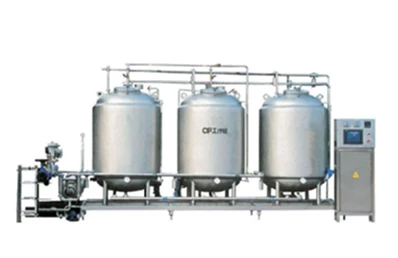
verticalLiquid Preparation TankIt is a mainstream fluid preparation equipment in industries such as pharmaceuticals, food and beverage, fine chemicals, and daily chemical products. With its characteristics of small footprint, good sealing, and adaptability to automated production, it is widely used in standardized production lines in dust-free workshops. The vertical mixing tank belongs to the vertical pressure and vibration type process equipment. The tank body has a high height and a large full load weight, and there is continuous slight vibration during the mixing operation.
The standardization of equipment installation and fixation directly determines the stability of tank operation, pipeline sealing, production safety, and workshop GMP compliance. If the fixing method is not standardized, the base does not meet the standards, and the leveling is not in place, long-term operation is prone to problems such as tank tilting, loose feet, pipeline leakage, vibration noise, and weight data drift, which affect the stability of production batches and workshop safety production. To help enterprises standardize construction and avoid installation hazards, this article provides a detailed introduction to the complete set of regulatory requirements for the installation and fixation of vertical mixing tanks, covering core contents such as base construction, foot fixation, horizontal leveling, seismic limit, grounding safety, and acceptance standards.
1、 Construction specification requirements for equipment installation base
The base is the foundation structure for the vertical liquid distribution tank to bear the load. All fixed installation processes are carried out based on qualified bases, which must meet the core standards of load-bearing, flatness, stability, and anti settlement, and be suitable for both no-load and full load operating conditions of the equipment.
The base should adopt a reinforced concrete hardened pouring structure, and the pouring thickness and reinforcement specifications should be designed according to the total weight of the full load of the mixing tank, with sufficient load-bearing capacity reserved to avoid ground settlement, cracking, deformation and other problems caused by long-term full load operation. The base of ordinary small and medium-sized vertical liquid dispensing tanks needs to ensure a compact structure and meet the strength standards. Large weighing and sterile fully automatic liquid dispensing tanks need to have a separate independent base, which should be structurally distinguished from the ground and workshop floor to avoid ground deformation affecting equipment accuracy.
The surface of the base needs to be polished flat, and the overall flatness error should be controlled within the allowable range of the industry, without protrusions, potholes, or inclined slopes, providing a foundation for the horizontal installation and uniform force distribution of the equipment. The base of pharmaceutical and food dust-free workshops needs to undergo anti-seepage, dust-proof, and corrosion-resistant treatment on the surface, with neat edges and corners without any hygiene dead corners, and adapted to the clean production standards of the workshop. At the same time, the base should be at a reasonable height above the ground to prevent the equipment base and foot accessories from being soaked in water on the ground, and to prevent metal parts from being damp and corroded.
2、 Specification requirements for foundation installation and fixation
The vertical liquid distribution tank mainly relies on anchor bolts and support feet to fix the limit. The accuracy and fastening standards of the anchor installation are the core key to preventing displacement and loosening of the tank body, and it is necessary to strictly follow the standardized fixing process during construction.
The equipment is usually equipped with fixed support feet or adjustable feet. Before installation, it is necessary to check the number and specifications of the feet to ensure that they match the holes on the equipment base, and to prevent problems such as misplaced holes and mismatched accessories. The installation of anchor bolts adopts pre embedded or post anchoring technology, and the depth of bolt burial and anchoring strength must meet the equipment load-bearing standards to ensure that the bolts are tightly combined with the concrete base, without looseness or virtual position.
After the tank is placed, it is necessary to ensure that each set of feet is evenly stressed, without being suspended or subjected to unilateral pressure, to avoid excessive local stress that may cause deformation of the base and tilting of the tank. The tightening of bolts should follow the principle of symmetrical and staged locking, with even diagonal reinforcement to ensure the balance of force on the base and avoid offset problems caused by uneven tightening force on one side. After all the foundation fixation is completed, it is necessary to check the fit to ensure that the base is tightly attached to the pedestal without any obvious gaps.
For vertical liquid distribution tanks with weighing modules, the foot fixation must strictly distinguish between the load-bearing point and the limit point, and it is forbidden to rigidly fix the weighing area. The weighing force space should be reserved to avoid distortion of weighing data and measurement deviation caused by too tight fixation.
3、 Requirements for leveling specifications of tank level and verticality
The vertical mixing tank is a vertical structure, and the mixing system, sealing system, and piping system have high requirements for the levelness and verticality of the tank body. It is a core acceptance item for installation and fixation, which directly affects the stability of equipment operation.
During the process of equipment positioning and fixation, it is necessary to use a level and vertical detector for real-time calibration, and strictly control the parameters of the tank's levelness and verticality. The horizontal and vertical deviations of the tank body must be controlled within the industry standard range, and inclined installation of the tank body is prohibited. Tilting installation can cause problems such as eccentric operation of the mixing blade, unilateral wear of the tank wall, uneven mixing of materials, and leakage of pipeline interfaces. Long term operation can also exacerbate equipment vibration and shorten equipment service life.
Adjustable feet can be adjusted for height based on calibration data, gradually correcting deviations and achieving accurate leveling. The leveling work needs to be completed before the initial fixation of the foundation and the docking of the pipeline. After the leveling meets the standard, the locking and pipeline docking can be carried out to avoid the inability to make minor adjustments after later fixation, which may result in installation hazards. High end models with measuring and sterile production functions require multiple rechecks and calibrations to ensure parameter accuracy meets standards.
4、 Specification requirements for earthquake resistance, limit and anti offset fixation
During the mixing operation and material circulation process of the vertical mixing tank, continuous slight vibration will be generated. Long term vibration can easily cause loosening of the foundation, slight displacement of the tank body, and failure of the interface seal. Therefore, it is necessary to provide earthquake proof and limit fixing measures to adapt to long-term continuous production conditions.
Under normal production conditions, shock-absorbing gaskets and accessories can be installed on the contact surface between the foundation and the base to cushion the operating vibration of the equipment, reduce vibration transmission, and minimize the probability of loosening of the foundation bolts. For large vertical mixing tanks and high-speed mixing equipment, specialized limit devices need to be installed. Limit blocks should be set around the equipment base to limit the horizontal displacement of the tank body and prevent displacement and displacement problems during long-term operation.
The sterile equipment in the dust-free workshop is prohibited from being fixed by exposed welding to avoid contamination of the workshop environment by welding slag and metal debris. Prefabricated limit and shock-absorbing structures are preferred, which are easy to disassemble, clean and residue free, and comply with GMP clean construction standards. All shockproof limit accessories must be compatible with the equipment material, corrosion-resistant, not easily aged, and suitable for long-term production environments in the workshop.
5、 Electrical grounding and safety fixing specifications requirements
Vertical mixing tanks belong to metal shell industrial equipment, and material flow, stirring and friction can easily generate static electricity. Sealed tanks have the risk of static electricity accumulation and leakage. During the installation and fixation stage, grounding fixation must be completed synchronously to ensure production safety.
The equipment needs to be equipped with an independent grounding point, and a compliant grounding wire should be used to complete the grounding connection. The grounding resistance should meet the safety standards of industrial equipment, effectively release the static electricity generated by the operation of the equipment, avoid safety hazards caused by static electricity accumulation, and reduce the risk of leakage. The grounding connection point should be firmly fixed without looseness, the wire layout should be neat, and the protection should be intact to avoid vibration causing the wiring to fall off.
The auxiliary components such as electrical control cabinets, line brackets, and sensor accessory brackets need to be fixed synchronously and in a standardized manner. The brackets should be installed flat and firmly, without shaking or tilting. The lines should be arranged neatly, and the fixed spacing should comply with regulations to avoid equipment vibration causing line wear, detachment, and short circuits, ensuring the stable operation of the electrical system.
6、 Specification requirements for pipeline linkage fixation
After the vertical mixing tank body is fixed, the supporting material pipeline, cleaning pipeline, and steam pipeline need to be synchronously linked and fixed to avoid the impact of pipeline stress pulling on equipment stability.
All external pipelines must be fixed with independent pipe supports. It is forbidden for the weight of the pipeline to directly apply pressure to the tank interface to avoid deformation of the interface, sealing leakage, and displacement of the tank due to long-term gravity pulling. The interface between the pipeline and the tank should be kept in a natural docking state, without forced displacement or hard pulling, with a small amount of vibration allowance reserved to adapt to the operating vibration conditions of the equipment.
The fixed spacing of the pipeline is uniform, the support is firm, the pipeline is suspended and shaken, the resonance problem between equipment and pipeline is reduced, the overall stability of the tank and pipeline system is guaranteed, and the interface looseness, medium leakage and other faults that may occur during long-term operation are avoided.
7、 Specification for exclusive fixed installation in cleanroom
In addition to the general fixed standards, the vertical mixing tanks in pharmaceutical and food clean rooms also need to meet the requirements of clean production and GMP acceptance, and the installation details are more stringent.
All feet, brackets, and fixed accessories are made of sanitary grade stainless steel material, which is not easy to rust and does not produce impurities, avoiding the pollution of workshop environment and materials caused by rusting of accessories. The gap between the equipment base and the base shall be sealed and sealed. Clean sealant shall be used to fill and level the gap without gaps or dead corners of dust accumulation, which is convenient for daily cleaning and disinfection and sterilization, and to prevent dirt and breeding microorganisms.
The entire process adopts a dust-free construction method, prohibiting rough and dusty construction. After the construction is completed, the site is cleaned up in a timely manner, and the equipment base and fixed points are cleaned in multiple directions to ensure that the workshop clean environment meets the standards.
8、 Installation and Fixed Acceptance Specification Standards
After the installation of all vertical mixing tanks is completed, they must pass standardized acceptance and be confirmed to have no installation hazards before they can be put into commissioning and production.
Firstly, verify that the bearing capacity, flatness, and cleanliness of the base meet the standards, and that the anchor bolts are securely fastened, evenly stressed, and not loose; Secondly, verify that the horizontal and vertical parameters of the tank body meet the equipment design standards and have no inclination or deviation; Subsequently, check that the seismic limit, grounding device, and pipeline fixation are intact and effective, without defects or hidden dangers; Finally, conduct a no-load trial run to observe that the equipment operates without abnormal vibration, displacement, or noise, and that there is no leakage or data stability at the interface.
After the acceptance is completed, the installation records, calibration data, and safety inspection ledger shall be retained to form a complete installation traceability data, meeting the requirements of workshop safety production and GMP compliance management.
Summary
verticalLiquid Preparation TankThe core specification requirements for installation and fixation are mainly reflected in seven dimensions: stable base construction, uniform foot fixation, accurate leveling and calibration, seismic limit protection, safe grounding treatment, pipeline linkage fixation, and clean and compliant construction. Standardized fixed installation can not only ensure the long-term stable operation of vertical liquid distribution tanks, reduce common faults such as vibration, leakage, and displacement, and extend the service life of equipment, but also meet the GMP cleanliness standards and industrial safety production norms of clean rooms, ensuring continuous, standardized, and compliant production of enterprises.