all search

Tel: +86-311-66695955, +86 18631137373
Factory Address: No.29-11 Jinyu Avenue, Zanhuang Economic Development Zone, Shijiazhuang City, Hebei Province, P.R.China
Office Address: 14th Floor, East Wing, Business Building 6, Xuhui Zhongrui Mansion, No.281 South Jianshe Avenue, Shijiazhuang City, Hebei Province
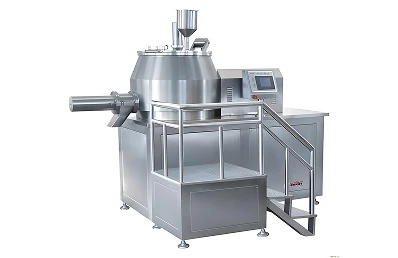
Wet granulatorIt is the core granulation equipment in dust-free workshops for pharmaceuticals, health products, food, and fine chemicals, mainly responsible for powder mixing and wetting granulation processes. The material pipeline, cleaning pipeline, and medium pipeline supporting the equipment are important carriers for material transportation, CIP cleaning, and process medium circulation. The standardization of pipeline docking and installation directly affects the cleanliness, granulation stability, cleaning effect, and workshop GMP compliance of the equipment.
During the process of equipment installation, workshop renovation, and pipeline replacement and upgrading, many enterprises encounter problems such as material residue, cleaning dead corners, dust leakage, cross contamination, etc. due to non-standard pipeline docking details, resulting in unstable product batches, substandard quality inspection, and frequent equipment maintenance. To assist construction and operation personnel in standardizing their operations, this article combines clean room standards and industrial practical experience to provide a detailed overview of the core considerations for the installation of wet granulation machine pipelines, covering the entire process of material selection, layout design, docking technology, sealing standards, cleaning treatment, and pressure testing acceptance.
1、 Precautions for pipeline material selection, suitable for clean granulation conditions
The connection of wet granulation machine pipelines first needs to control the compatibility of materials. Different pipeline uses need to be matched with corresponding materials to meet the requirements of corrosion resistance, easy cleaning, and no precipitation in clean production, avoiding pipeline pollution and aging problems from the source.
For the conveying pipelines, adhesive spraying pipelines, and finished product discharge pipelines that come into contact with materials, it is recommended to use sanitary grade stainless steel pipes, commonly made of 304 and 316L materials. The inner walls of the pipes need to be finely polished, with a smooth and even surface, no pores, cracks, or slag inclusions. They are not easy to adhere to powder materials or viscous liquids, and can effectively reduce material residue. They are suitable for CIP online cleaning and high-temperature sterilization conditions. Prohibit the use of ordinary pipes that are prone to rust, easy to peel off debris, and have rough inner walls.
Sanitary grade pipes should also be used for cleaning pipelines, pure water pipelines, and circulating medium pipelines to ensure clean water quality and avoid secondary contamination of materials by pipeline impurities. Auxiliary accessories such as sealing gaskets and clamp sealing rings should be made of materials that are resistant to temperature, acid and alkali, and meet industry cleanliness standards. They should be suitable for various operating conditions such as room temperature, temperature rise, and high-temperature cleaning of the granulator to prevent gasket aging, precipitation, deformation, and leakage.
2、 Precautions for pipeline layout design to reduce residual dead corners
The pipeline layout is the core link of the wet granulation machine docking and installation. A reasonable layout can effectively solve common problems such as material retention, unclean cleaning, and dust accumulation, and adapt to the clean production standards of dust-free workshops.
The overall pipeline route should be simple and orderly, following the principle of short distance and minimal connections. The length of the pipeline should be planned reasonably, and the number of bends, tees, reducers, blind pipes and other connecting components should be minimized as much as possible to reduce the probability of material accumulation and cleaning residue. It is prohibited to have excessively long blind pipes, low dead corners, and protruding water accumulation areas to avoid the long-term retention of granulation materials and cleaning wastewater inside the pipeline, which can breed microorganisms and cause material deterioration problems.
All material pipelines and cleaning pipelines need to be set with reasonable drainage slopes, and reserved inclination angles according to equipment installation standards to ensure that residual materials and cleaning wastewater in the pipelines can be naturally drained without water accumulation or material residue after the equipment is stopped. Pipeline layout should avoid areas with severe equipment vibration and high temperature heat sources, in order to reduce issues such as interface looseness and material aging caused by long-term pipeline vibration.
At the same time, it is necessary to distinguish the functional pipeline partition layout, and orderly separate the material pipeline, steam pipeline, cooling pipeline, and sewage pipeline to avoid pipeline cross interference and heat interference, facilitate later maintenance, cleaning, and pipeline inspection, and adapt to the standardized layout requirements of the workshop.
3、 Precautions for hygiene grade docking process to ensure stable sealing
Wet granulation machines are commonly used in high-purity production scenarios. Pipeline connections that are prone to dirt and grime, such as ordinary welding or threaded connections, are prohibited and must comply with hygiene grade connection process standards.
The interface of the equipment body and the docking position of the pipeline should prioritize the use of sanitary grade quick installation clamps and flange docking methods, which are easy to disassemble, tightly sealed, and have no installation dead corners, making it convenient for later disassembly, cleaning, and pipeline maintenance. Before docking, it is necessary to check the diameter of the pipeline and the specifications of the interface to ensure that the pipeline is completely matched with the equipment inlet and outlet, cleaning port, and spray port, and to avoid misalignment of the diameter and misalignment of the docking, which may affect the material conveying and cleaning effect.
The welding operation requires the use of sterile and clean welding technology. The weld seam should be full and flat, without pores, slag inclusions, or protruding burrs. After welding is completed, the weld seam position should be polished and polished to ensure a smooth and uniform inner wall of the pipeline, and to prevent material accumulation and dust accumulation in the weld seam. Threaded connections can only be used for non clean auxiliary pipelines. Threaded connections are prohibited for material conveying core pipelines to prevent residual materials and the growth of pollutants in threaded gaps.
During the installation process of pipeline docking, it is necessary to ensure that the interface is horizontally aligned, concentric, without tilting or misalignment, to avoid problems such as weak sealing and leakage caused by one-sided force, and to ensure the stability of the entire pipeline structure and standardized docking.
4、 Precautions for sealing installation to prevent leakage and pollution
The sealing quality directly determines the operational stability and cleanliness of the pipeline system, and is a key control link for the installation of wet granulation machine pipelines. It can effectively avoid problems such as dust leakage, material leakage, and external air infiltration.
Before installing the sealing components, it is necessary to check the appearance status, remove gaskets and sealing rings that are deformed, cracked, aged, or damaged. At the same time, clean the sealing groove, flange end face, and clamp contact surface to remove dust, oil, and impurities, ensuring that the sealing contact surface is clean and flat, and providing basic conditions for a tight fit.
The sealing ring should be installed in a centered and aligned manner, without offset, compression, or missing installation. The clamps and flange bolts should be tightened symmetrically and in stages to ensure uniform force distribution and avoid interface deformation and sealing failure caused by excessive single point tightening force. After the installation of all sealing points is completed, it is necessary to check the interface gaps one by one to ensure a tight fit and no loose gaps.
For pipeline interfaces for high-temperature cleaning and steam sterilization, it is necessary to select sealing accessories that are suitable for temperature resistance levels, adapt to temperature changing working conditions, reduce sealing looseness and leakage caused by thermal expansion and contraction, and ensure the stability of pipeline sealing under alternating high and low temperature working conditions.
5、 Precautions for clean construction and installation, compatible with dust-free workshop standards
During the wet granulation machine pipeline docking construction in pharmaceutical and food dust-free workshops, it is necessary to follow clean construction standards throughout the process to avoid secondary pollution and damage to the clean environment of the workshop.
Before construction, all pipes, fittings, and tools must be cleaned, dusted, and wiped in advance to remove impurities such as factory dust, oil stains, and iron filings inside the pipes. It is prohibited to bring contaminated materials or tools into the clean work area. Construction personnel must wear dust-free protective equipment and strictly comply with the construction standards of the dust-free workshop.
Dust prevention measures should be taken for pipeline cutting, welding, and drilling operations, and debris, welding slag, and dust generated during construction should be promptly cleaned to prevent impurities from falling into the pipeline or polluting the workshop environment. Open polishing and dust raising operations are prohibited in clean areas, and construction pollution sources are strictly controlled.
After the completion of the single-stage pipeline docking, it is necessary to promptly seal the pipeline ports to prevent workshop dust, water vapor, and debris from entering the pipeline and avoid secondary pollution of the pipeline. After the completion of the entire pipeline construction, it is necessary to flush, blow, and remove dust from the interior and interface positions of all pipelines, and remove residual impurities from the construction.
6、 Precautions for installation of valves and auxiliary accessories
The installation specifications of pipeline auxiliary accessories such as valves, filters, exhaust valves, pressure gauges, etc. directly affect the controllability and stability of the pipeline system, and need to be reasonably arranged and installed in conjunction with the granulation process.
Sanitary grade ball valves, diaphragm valves, and other control valves should be installed in positions that are easy to operate, maintain, and observe. They should be installed strictly according to the flow direction of the medium to ensure flexible opening and closing, reliable sealing, and no jamming. The material pipeline needs to be equipped with suitable filtering accessories to intercept material impurities and protect the pipeline and subsequent equipment.
An exhaust device should be installed at the high point of the pipeline to timely discharge the accumulated air inside the pipeline, avoid air blockage and bubble problems, and ensure smooth material transportation and cleaning water flow; Reserved drainage and emptying interfaces at low points for easy later drainage and cleaning. Monitoring accessories need to be installed at standard measuring points to ensure accurate data collection and real-time feedback on pipeline operation status.
7、 Precautions for pressure testing, leak detection, and commissioning acceptance
After the completion of pipeline docking and installation, it is strictly prohibited to directly put it into granulation production. It must undergo pressure testing, leak detection, trial operation acceptance, and hidden faults investigation to ensure the compliance and usability of the pipeline system.
Carry out water or air pressure sealing tests according to equipment process standards, observe the corresponding duration of pressure stabilization, check the positions of all interfaces, welds, valves, and flanges, confirm that there are no leaks, pressure drops, or pipeline deformations, and ensure that the sealing of the entire pipeline meets the standard. After the pressure test is completed, drain the accumulated water and residual medium in the pipe to avoid the accumulation of impurities.
During the acceptance stage, it is necessary to verify whether the pipeline layout, slope, emptying effect, accessory installation, and sealing status meet the requirements of the clean process, confirm that there are no clean dead corners, no leakage hazards, and smooth transportation. Simultaneously simulate the operating conditions of the equipment, conduct no-load and material carrying trial runs, observe the stable operation of the pipeline, no vibration or abnormal noise, and no material residue.
After passing the acceptance inspection, the pressure test records, installation ledger, and commissioning data shall be retained to form a complete construction traceability data, meeting the GMP compliance management requirements of the clean room.
8、 Precautions for later operation and maintenance reservations
During the pipeline docking and installation phase, it is necessary to take into account the later maintenance and cleaning needs, and the overall pipeline structure should be easy to disassemble, clean, and maintain. Easy to wear and tear seals, valve accessories, and filter components need to reserve disassembly and assembly space for easy maintenance and replacement in the later stage, without the need for extensive disassembly of pipelines, reducing the difficulty of operation and maintenance and pollution risks.
At the same time, the pipeline layout needs to be adapted to the CIP online cleaning process of the equipment, ensuring that the cleaning water flow covers all the inner walls and interface positions of the pipeline, without any cleaning blind spots, and guaranteeing the cleanliness and stability of the pipeline during long-term production.
Summary
Wet granulatorThe core precautions for pipeline docking installation mainly include six key points: selection of clean materials, layout design without dead corners, sanitary docking technology, fine sealing installation, dust-free standard construction, and pressure testing and leak detection acceptance. Different from ordinary industrial pipeline installation, the wet granulation machine pipeline pays more attention to cleanliness, emptying, sealing, and washability. All docking details revolve around avoiding material residue, eliminating cross contamination, ensuring process stability, and complying with GMP compliance standards. Standardized pipeline docking and installation can effectively improve the quality stability of wet granulation machine granules, reduce equipment failures and material losses, and adapt to the refined production needs of dust-free workshops.