all search

Tel: +86-311-66695955, +86 18631137373
Factory Address: No.29-11 Jinyu Avenue, Zanhuang Economic Development Zone, Shijiazhuang City, Hebei Province, P.R.China
Office Address: 14th Floor, East Wing, Business Building 6, Xuhui Zhongrui Mansion, No.281 South Jianshe Avenue, Shijiazhuang City, Hebei Province
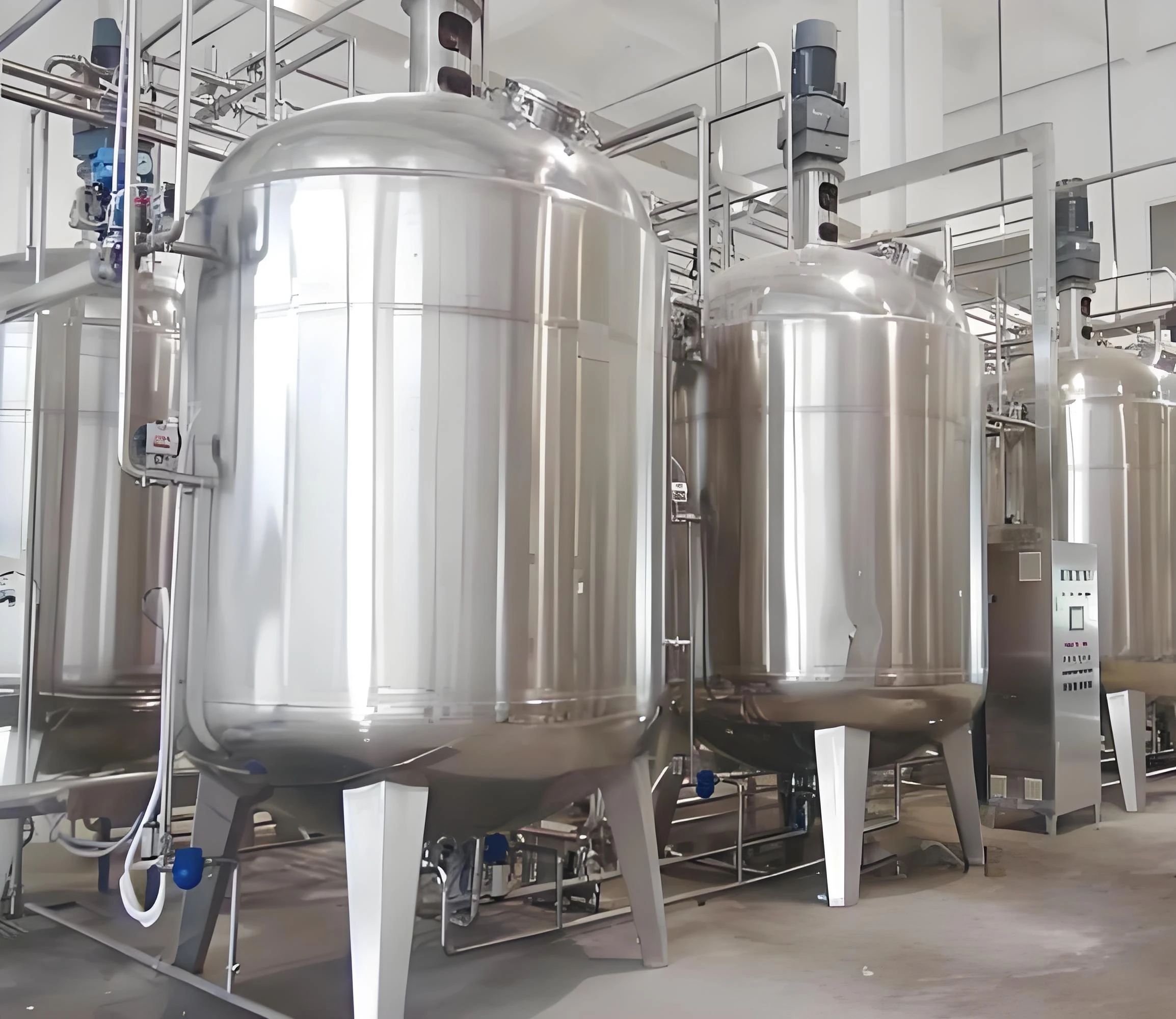
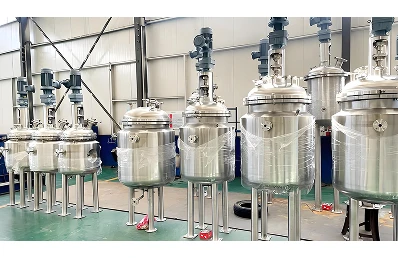
In the fluid processing industries such as chemical, pharmaceutical, food and beverage, and daily chemical,Liquid Preparation TankBoth ordinary mixing tanks and material handling equipment are quite common. Due to the high similarity in appearance between the two devices, both of which have the basic function of material mixing and blending, many users are easily confused when selecting equipment, and are not clear about the specific differences between the two, making it difficult to choose the appropriate equipment according to the production process.
In fact, the mixing tank belongs to the specialized equipment for refined processes, while the ordinary mixing tank belongs to the general basic mixing equipment. There are significant differences between the two in terms of design positioning, core functions, configuration structure, process accuracy, and applicable scenarios. This article will provide a detailed comparison of the differences between mixing tanks and ordinary mixing tanks from multiple perspectives, helping companies accurately select and adapt to their own production needs.
1、 Different device design positioning
The design positioning of the equipment is the essential difference between the mixing tank and the ordinary mixing tank, and the original intention and core service scenarios of the two devices are completely different.
Ordinary mixing tank: focusing on universal and basic material processing, the design core is only focused on "material mixing and blending", mainly used to solve material sedimentation and stratification problems, and meet basic mixing needs. The equipment has a simple structure and streamlined configuration, without complex process control modules, and is only suitable for extensive production processes without strict requirements for matching ratio, temperature, and cleanliness. It is a highly versatile basic equipment in industrial production.
Liquid preparation tank: specializing in standardized and refined fluid preparation, designed specifically for liquid material proportioning, dissolution, blending, and constant temperature storage processes. The equipment is designed with "accurate liquid preparation, homogenization stability, and cleanliness compliance" as its core, integrating multiple functions such as stirring, temperature control, metering, measurement and control, and sterilization. The entire structure is optimized around high-precision and high cleanliness liquid preparation processes, specifically serving refined production scenarios with standardized requirements for material parameters and production environments.
2、 Differences in core structure configuration
Due to the influence of design positioning, there is a significant difference in the internal configuration and auxiliary structure between the mixing tank and the ordinary mixing tank, which is also a core feature that can be visually distinguished.
1. Differences in temperature controlled heat exchange structures
Most ordinary mixing tanks have a single-layer tank structure without interlayer heat exchange or insulation configuration, and do not have temperature control capabilities. They can only complete material mixing operations at room temperature and cannot adapt to the processing needs of materials that require heating, cooling, and constant temperature dissolution. A few customized models are only equipped with simple heating components, without an accurate temperature control system, and have a large temperature fluctuation range.
The mixing tank comes standard with a double-layer or three-layer sandwich structure, which can be filled with heat exchange media such as steam, hot water, and cooling water. Paired with matching temperature control components, it can achieve precise temperature control of materials such as heating, cooling, and constant temperature insulation. Capable of stably controlling material temperature based on the dissolution characteristics of different raw materials and process requirements, ensuring full dissolution of raw materials and stable proportioning, and adapting to the preparation and production of temperature sensitive materials.
2. Differences in measurement and control structures
Ordinary mixing tanks lack professional measurement and control configurations, as well as liquid level, weighing, and temperature monitoring sensors. In the production process, they mainly rely on manual visual inspection and measurement feeding, and the accuracy of material proportioning depends on manual operation, which can easily lead to proportioning deviations and fail to control the uniformity of material parameters.
The dispensing tank is equipped with a complete set of intelligent measurement and control system, which includes core components such as temperature sensor, liquid level sensor, weighing sensor, and electronic control operating system. Real time monitoring of core data such as temperature, capacity, and weight of materials in the tank, accurate recording of raw material feeding amount, effectively reducing errors caused by manual operation, ensuring the uniformity of material ratio and concentration in each batch, and meeting standardized production requirements.
3. Differences between clean and sealed structures
The sealing structure of ordinary mixing tanks is simple, and some equipment is designed in an open or semi open manner. The sealing of the tank interface and cover plate is generally poor, which makes it easy for dust and impurities to enter. The materials are prone to volatilization and pollution, and there is no professional cleaning and sterilization structure, making it difficult to ensure production cleanliness. It is only suitable for processing ordinary industrial materials.
The liquid preparation tank adopts a fully sealed sanitary grade design, with smooth and seamless welds on the tank body. Paired with high-quality sealing components, it can effectively isolate external impurities and reduce material volatilization loss. At the same time, CIP online cleaning and SIP sterilization interfaces and structures are standard, which can complete fully automatic cleaning and sterilization operations inside the tank body, meet the production standards of sterility and high cleanliness, and adapt to the strict requirements of industries such as medicine and food.
3、 Difference between process function and operational accuracy
The difference in structural configuration directly determines the different operational functions and process accuracy levels of the two devices, and there is a significant difference in the production process standards they are adapted to.
1. Different functional richness
The ordinary mixing tank has a single function and only has basic functions such as mixing, blending, and anti sedimentation. It can only complete simple material mixing processes and does not have extended functions such as constant temperature storage, accurate proportioning, sterile processing, and online cleaning. Its process adaptability is relatively limited.
The function integration of the mixing tank is higher, integrating feeding, dissolution, stirring, proportioning, temperature control, homogenization, constant temperature storage, online cleaning, and aseptic treatment. It can complete the entire fluid material preparation process at once without the need for other auxiliary equipment, making the process connection smoother and suitable for refined and integrated production processes.
2. Different homework accuracy and stability
The ordinary mixing tank has a fixed mixing speed and no parameter control function. The material mixing uniformity is average, and it is prone to local concentration unevenness. Moreover, there are significant differences in material parameters between batches, resulting in poor production stability and inability to meet high-precision process requirements.
The mixing tank supports accurate preset and adjustment of mixing speed, mixing duration, and temperature range, and is equipped with specialized blades that are suitable for different materials, which can achieve full homogenization and dissolution of materials. Relying on an intelligent measurement and control system, core parameters such as material ratio, temperature, and concentration can be stably controlled, resulting in good batch production consistency and stronger process stability.
4、 Differences in applicable industries and application scenarios
Based on the differences in functionality and accuracy, the application scenarios of the two devices are clearly divided, and users can quickly select according to their own production processes.
1. Applicable scenarios for ordinary mixing tanks
Mainly used in extensive production scenarios where there are no strict requirements for proportioning accuracy, cleanliness, and temperature, including ordinary chemical raw material blending, low-end daily chemical raw material mixing, sewage treatment agent mixing, building slurry mixing, and other scenarios. This type of production has low requirements for material uniformity and batch consistency, and does not require fine parameter control. Ordinary mixing tanks can meet basic production needs.
2. Applicable scenarios for the liquid preparation tank
It is widely used in the refined and high standard fluid production industry, covering scenarios such as pharmaceutical drug formulation, functional food ingredient blending, skincare solution formulation, fine chemical reagent formulation, and sterile material processing. This type of industry has high requirements for material ratio accuracy, cleanliness, temperature stability, and batch uniformity, and relies on the fine control ability of the mixing tank to ensure product quality compliance and stability.
5、 Summary of Selection Core: How to Choose the Most Suitable?
If production only requires simple material mixing and anti sedimentation treatment, without accurate proportioning, temperature control, and sterile requirements, and the budget is relatively limited, ordinary mixing tanks can be selected to meet basic production needs, with simple equipment maintenance and lower investment costs.
If the production involves accurate liquid ratio, fine powder dissolution, constant temperature process, sterile and clean production, and there are requirements for product batch stability and process standardization, it is recommended to choose a mixing tank that is suitable for high standard production processes to reduce material loss and the probability of product failure.
Summary
Simply put, a regular mixing tank is a basic mixing equipment that focuses on simple mixing and rough operation, with a single function and average accuracy;Liquid Preparation TankIt is a refined process equipment that has upgraded core functions such as temperature control, metering, measurement and control, and clean sterilization on the basis of stirring and mixing. It has the advantages of accurate liquid preparation, homogeneous stability, and sterile production. There is no superiority or inferiority between the two, the core is that the adapted production process and industry standards are different. Enterprises only need to select based on their own production needs and process accuracy standards to achieve greater equipment value.