all search

Tel: +86-311-66695955, +86 18631137373
Factory Address: No.29-11 Jinyu Avenue, Zanhuang Economic Development Zone, Shijiazhuang City, Hebei Province, P.R.China
Office Address: 14th Floor, East Wing, Business Building 6, Xuhui Zhongrui Mansion, No.281 South Jianshe Avenue, Shijiazhuang City, Hebei Province
In the renovation and expansion of industrial plants and the construction of new production lines,Material pipelineIt is the core supporting facility of the production system, responsible for key functions such as raw material transportation, finished product transportation, and waste gas and liquid diversion. Compared to ordinary water supply and drainage pipelines and fire protection pipelines, material pipelines have higher requirements for installation flatness, pipeline straightness, and support load-bearing accuracy. Once the construction site does not meet the standards in the early stage, a series of engineering hazards such as uneven stress on pipeline supports, pipeline bending and deformation, large docking gaps, and later material transportation blockage and leakage may occur.
The root cause of many pipeline construction rework problems is not construction process errors, but inadequate site pre-treatment in the early stage. According to the Industrial MetalsPipeline engineeringBefore the installation of pipelines on site, it is necessary to complete site acceptance from six dimensions: site foundation conditions, work space, on-site water and electricity, surrounding environment, material stacking, and safety protection, in accordance with the "Construction Specification" and industry common material pipeline construction standards. Specific detailed requirements are as follows:
1、 Ground foundation requirements for the site: Ensure that the ground is flat and solid, and meet the load-bearing requirements of the supports
Material pipelines are often fixed and installed using floor brackets and suspension brackets. The ground foundation is the load-bearing foundation of the entire pipeline system and also the core acceptance item of the site in the early stage. The specific standards are as follows:
1. Ground flatness meets the standard: There are no obvious potholes, protrusions, or cracks on the ground in the construction area along the pipeline, and the overall height difference of the ground is controlled within ± 5mm. If the ground height difference is too large, the pipeline support will tilt after installation, and the long-term operation will be unbalanced, causing problems such as pipeline weld cracking, flange loosening and material leakage. The uneven ground needs to be leveled with cement mortar in advance, and construction can only be carried out after the curing meets the standards.
2. The ground bearing capacity meets the construction standards: The ground of the floor standing pipeline support area needs to be hardened, and the thickness of the plain concrete ground should not be less than 100mm. It is prohibited to directly install pipeline supports on soft soil, backfill soil, or loose gravel ground. For large-diameter and heavy-duty material conveying pipelines, independent support concrete foundations need to be poured in advance to prevent overall deformation of the pipeline caused by later ground settlement.
3. No standing water or oil residue on the ground: The construction site should keep the ground dry and clean up any standing water, industrial oil, chemical residue, and waste liquid in advance. Water accumulation can affect the quality of welding construction and reduce the firmness of the weld seam; Oil stains adhering to the ground can easily cause construction workers to slip, and the volatile substances of oil stains can affect the welding environment of pipelines, increasing the risk of welding defects.
2、 Requirements for homework space: Reserve sufficient construction and maintenance space to avoid pipeline interference
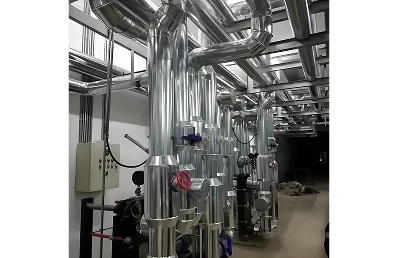
Material pipelines are divided into two mainstream installation methods: ground laying and overhead suspension. Both working conditions require reserved standard operating space to avoid construction obstruction and inability to maintain in the later stage
1. Ground buried/ground exposed pipelines: Reserve no less than 800mm of operating space on both sides of the pipeline, prohibit the stacking of construction waste, idle equipment, and debris from occupying the work area, and ensure the normal progress of welding, alignment, anti-corrosion and insulation construction; Within the straight range of the pipeline, there shall be no obstacles such as columns, equipment bases, walls, etc. crossing the pipeline.
2. Overhead suspended material pipeline: The clearance height from the bottom of the pipeline to the ground shall not be less than 2.2m, meeting the normal passage of personnel, forklifts, and material transfer vehicles in the factory area; Maintain a safe distance above the pipeline from the factory roof, cable trays, ventilation ducts, and cable trays, with a horizontal distance of no less than 300mm.
3. Reserve space for later maintenance: For key accessories such as pipeline flange interfaces, valves, compensators, filters, etc., an additional maintenance space of no less than 1m should be reserved to facilitate equipment maintenance, accessory replacement, and pipeline cleaning operations in the later stage.
3、 Requirements for on-site water, electricity, and temporary facilities: meet the basic conditions for continuous construction
Material pipeline installationIncluding multiple processes such as cutting, welding, groove polishing, and water/air pressure testing, stable temporary water and electricity are the foundation for continuous construction. The site water and electricity must meet the following requirements:
1. Temporary electricity standard layout: The construction area is connected to 380V industrial temporary electricity, equipped with independent distribution boxes and leakage protection devices. The wires are laid overhead, and ground dragging and wiring are prohibited; High power equipment such as welding equipment, cutting machines, and pressure testing pumps are powered separately to avoid voltage instability affecting welding quality. At the same time, it is necessary to provide rain and dust protection for electricity use, and outdoor construction distribution boxes should have rain and dust prevention functions.
2. Construction water connection as needed: For material pipelines that require water pressure testing and inner wall cleaning, the construction site should be connected to the nearest industrial water interface to ensure stable water pressure without fluctuations; For outdoor areas without nearby water sources, temporary water supply pipelines should be set up in advance to ensure that the pressure testing process is completed in one go.
3. Temporary operation platform in place: The vacant area of the site is divided into dedicated pipe cutting and groove processing operation platforms, far away from finished pipelines and completed areas, to avoid cutting sparks damaging surrounding facilities and achieve zoning management of the construction area.
4、 Requirements for on-site environment and climate conditions: Adapt to pipeline construction process standards
Weather conditions such as temperature, humidity, rain, snow, and strong winds can directly affect the effectiveness of pipeline welding, anti-corrosion, and sealing construction. Outdoor and semi outdoor sites must strictly follow environmental construction requirements:
1. Temperature requirements: The ambient temperature for pipeline welding construction should not be lower than -5 ℃. Metal pipes are prone to cold brittleness in low-temperature environments, and stress concentration in welds can lead to cracking; Take measures to provide shade during construction in hot and scorching weather to avoid thermal deformation of pipes caused by exposure to sunlight.
2. Wind, rain, and dust prevention requirements: During outdoor welding operations, if the wind speed on site is greater than 8m/s, a windproof shed must be erected to prevent wind from affecting the stability of the welding arc; Outdoor pipeline installation and welding operations are prohibited in rainy and snowy weather. After rain, the site must be completely dried before resuming work; For factory areas with high levels of dust, dust control measures should be implemented in advance to prevent dust from adhering to pipeline interfaces and affecting sealing effectiveness.
3. Corrosive environment control: There are corrosive gas areas in the chemical plant area. Before construction, the site should be well ventilated to reduce the concentration of acidic and alkaline gases in the air, prevent the surface of the pipes from being corroded in advance during the construction process, and affect the adhesion of the pipeline anti-corrosion layer.
5、 Requirements for the stacking area of pipes and fittings: separate storage and protection of finished pipeline products
Before pipeline installation, all pipes, valves, flanges, sealing gaskets, and support fittings need to be stored at designated locations on the construction site, and the stacking on site must comply with the following specifications:
1. Separate the pipe stacking area and keep it away from the construction hot work area and chemical corrosion area. Lay wooden or rubber pads on the ground, and prohibit direct contact of pipes with the ground to prevent moisture and scratches;
2. Classify and stack pipes in layers, with large-diameter pipes at the bottom and small-diameter pipes at the top. The stacking height should not exceed 1.5m to prevent deformation caused by pipe compression; Put small accessories such as sealing gaskets and valves into a dedicated storage box to prevent dust and debris from entering the interior of the accessories;
3. The pipeline materials stored outdoors are fully covered with waterproof and rainproof tarpaulins to prevent rainwater and sunlight from causing aging of the pipes and rusting of the inner walls, ensuring that the incoming pipes are intact and undamaged.
6、 Requirements for site survey and preliminary investigation: Avoid hidden engineering hazards in advance
Before the official start of construction, complete the survey of underground and aerial concealed pipelines at the construction site, which is an overlooked but crucial site preparation work: use professional detection instruments to check the existing underground cables, water supply and drainage pipelines, gas pipelines in the construction area, and at the same time check the existing cable trays and bus ducts in the air, mark the positions of all concealed pipelines, plan the direction of material pipelines, and strictly prohibit damage to the original factory infrastructure during construction drilling and support installation to avoid production stoppage and safety leakage accidents in the factory area.
Reminder of common misconceptions in venue preparation
In actual engineering construction, many construction teams simplify the site preparation process in order to catch up with the schedule. Common misconceptions include: installing supports directly without leveling the ground, forcibly constructing in narrow spaces without reserving maintenance positions, welding pipes outdoors in rainy days, and stacking pipes directly on the ground. The above operations may seem to save time in the early stage, but in the later stage, there is a high probability of problems such as pipeline rework, system leakage, and difficult maintenance, which will actually prolong the overall construction period and increase project costs.
Conclusion
Material pipeline installationThe project follows the industry standard of "three parts construction, seven parts preparation", and the standardized pre-treatment and acceptance of the construction site are the key prerequisites for ensuring the accuracy of pipeline installation, construction safety, and long-term stable operation in the later stage. Implementing site requirements from six dimensions: ground foundation, work space, water and electricity facilities, climate environment, material stacking, and concealed pipeline survey can effectively reduce construction rework, lower the probability of pipeline operation failures, make industrial material pipeline transportation smoother and operation more convenient, and comply with industrial pipeline standardization construction and safety production norms.